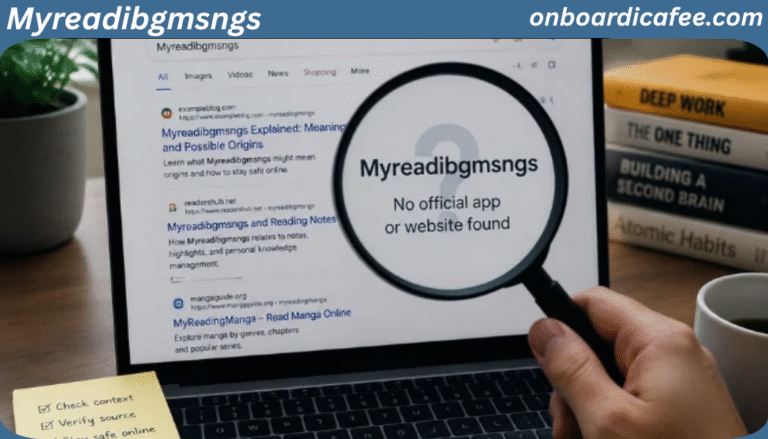
Hggbfe3fykc: What It Is, How It Works, and Why It Matters
If you have recently searched for hggbfe3fykc, you may have noticed that the term looks unusual. It does not resemble a normal English word, a familiar brand name, or a common technology term. It looks more like a random combination of letters and numbers.
That naturally raises several questions. What is hggbfe3fykc? Does it have a real meaning? Is it a code, username, software identifier, tracking value, or something created for search engine testing? Is it connected to a particular company or technology?
The most important point is that there is no widely recognized official definition of hggbfe3fykc at the time of writing. Current online results mostly describe it as a random, generated, experimental, or placeholder-style string. However, some websites make much stronger claims about its use in areas such as digital identity, security, SEO, and software development without providing authoritative evidence for those claims.
That distinction matters.
A strange string can certainly be used as an identifier in software. Developers, databases, testing systems, analytics platforms, and websites regularly use unique strings. But the fact that a string could be used this way does not prove that a particular string, including hggbfe3fykc, actually serves that purpose.
This guide takes a careful and practical approach. It explains what is known, what can reasonably be inferred, what should not be assumed, and why unusual keywords such as hggbfe3fykc are becoming more visible across the modern internet.
What Is Hggbfe3fykc?
Hggbfe3fykc appears to be an unusual alphanumeric string rather than a conventional word.
It contains lowercase letters and the number 3, but it does not form an obvious English word or recognizable phrase. Search results published during 2026 generally describe it as a random or generated string that may be associated with digital experimentation, placeholders, identifiers, or unusual online content.
There is currently no strong evidence that hggbfe3fykc is the official name of a major US company, established software product, government program, recognized technical standard, or widely documented technology.

This is an important difference between a search keyword and an established concept.
When people see an unfamiliar term online, they often assume it must have a hidden meaning. In reality, computers generate billions of strings every day. Many are never intended to be read by humans.
For example, a software system might create an identifier for:
- A database record
- A temporary test object
- A website session
- An uploaded file
- A transaction
- An internal process
- A development environment
- An experiment
- A content item
- A tracking event
A string can therefore look meaningless while still being useful to a computer.
However, there is no reliable evidence that hggbfe3fykc specifically performs each of these functions. Those are examples of what strings of this general type can do.
Does Hggbfe3fykc Have a Fixed Meaning?
At present, there is no verified fixed meaning for hggbfe3fykc.
This is perhaps the most useful answer for someone encountering the keyword for the first time.
Some current articles call it a unique identifier or placeholder, while others connect it to SEO experiments, digital systems, or emerging technology. These interpretations are possible, but they should not automatically be treated as established facts.
The difference between “could be” and “is” is especially important when discussing an obscure online term.
For example, saying that hggbfe3fykc “could be a generated identifier” is reasonable because software frequently creates identifiers that look similar.
Saying that hggbfe3fykc “is a specific authentication token” would require evidence from the system that created it.
Likewise, saying that it “is a new digital identity framework” would require documentation, technical specifications, a known organization, or another authoritative source.
No such authoritative documentation has been established in the available search results.
Therefore, the safest current interpretation is that hggbfe3fykc is an unexplained or synthetic-looking digital string whose exact origin and intended function remain uncertain.
Why Does Hggbfe3fykc Look Like a Code?
The human brain is trained to recognize familiar patterns.
When we see a word such as “computer,” “website,” or “database,” we immediately connect the letters to an idea. Hggbfe3fykc does not provide that same linguistic signal.
Instead, it resembles the type of string commonly generated by computers.
Modern digital systems often use combinations of letters and numbers because they are easy for software to store and compare. A system does not necessarily need a readable name for every object it manages.
Consider an online store.
A customer may see:
“Order #48291”
Behind the scenes, the system could have a much longer internal identifier. The customer does not need to understand that identifier. The database does.
The same principle applies to many digital systems.
aLSO rEAD: https://onboardicafee.com/bodenxt/
A generated string can be designed to reduce duplication, make records easier to distinguish, or connect different pieces of information.
Hggbfe3fykc has the appearance of this type of string, but its visual appearance alone does not reveal its actual purpose.
Hggbfe3fykc and Random Digital Strings
Random-looking strings are extremely common on the internet.
They can appear in URLs, cookies, application logs, APIs, database records, software tests, analytics systems, file names, temporary links, and many other places.
The main advantage is uniqueness.
Imagine a database containing millions of records. Giving every record the same name would create confusion. A system instead assigns a value that is unlikely to duplicate another record.
The identifier does not need to have a dictionary definition.
Its job is simply to distinguish one item from another.
This helps explain why a strange string like hggbfe3fykc can attract attention even when it does not have a traditional meaning.
People expect language to communicate ideas directly. Computers often use identifiers to communicate references.
That is a major difference between human language and machine-oriented data.
Could Hggbfe3fykc Be an Identifier?
It could be, but that should be described as a possibility rather than a confirmed fact.
A unique identifier is a value used to distinguish one object from another. In software, identifiers can be short or long, readable or random.
For example, an application might use:
USER-10492
or:
8f3a91c2
or:
hggbfe3fykc
The exact format depends on the developer and the system.
If hggbfe3fykc originated inside a particular application, it could potentially point to a record, test object, event, file, or other resource.
But without access to the system that generated it, there is no reliable way to determine what the string points to.
This is one of the most important lessons when researching unusual digital keywords: the characters alone are often not enough.
Context is everything.
Could Hggbfe3fykc Be a Placeholder?
Another reasonable possibility is that hggbfe3fykc was created as a placeholder.
Developers frequently need temporary values while building or testing software.
A placeholder can stand in for information that will be replaced later.
For example, during development, a programmer might use:
TEST_USER_001
TEMP_FILE
SAMPLE_DATA
or a random string.
The benefit of a strange value is that it is unlikely to be confused with a real customer, product, or production record.
Hggbfe3fykc has characteristics that would make it suitable for this kind of experiment.
Again, suitability does not prove origin.
There is no publicly established record showing that its original creator intentionally designed it as a software placeholder.
Hggbfe3fykc and SEO Testing
One of the more interesting possibilities involves search engine optimization.
SEO professionals sometimes study unusual keywords because a low-competition term can make it easier to observe how search engines discover, crawl, index, and rank a page.
A completely unusual string can work as a controlled experiment.
For example, an SEO researcher might publish a page containing a unique test phrase and then observe:
- Whether search engines discover the page
- How quickly the page is indexed
- Whether the phrase appears in search results
- How internal links affect discovery
- How page titles influence visibility
- How duplicate content affects indexing
- Whether different websites compete for the same unusual term
- How quickly rankings change
This type of experiment is especially useful because the test phrase has little or no historical search context.
Some current articles specifically describe hggbfe3fykc as an experimental or SEO-related keyword.
However, there is an important SEO lesson here.
A website should not assume that placing a random keyword on a page will automatically produce meaningful traffic or improve rankings.
Search engines are designed to satisfy users, not simply reward keyword repetition.
Why Random Keywords Can Become Searchable
A keyword does not need to be a dictionary word to become searchable.
Search engines process text strings, names, codes, identifiers, product numbers, usernames, and many other forms of data.
If enough pages mention hggbfe3fykc, the search engine may eventually build an index entry for the string.
This can create a strange feedback loop.
A term begins with almost no visibility.
Someone publishes an article about it.
Other websites copy, discuss, or independently target the same term.
More pages begin appearing.
People search the term because they see it elsewhere.
The term then becomes more visible.
This does not necessarily mean that the keyword has acquired a genuine meaning. It may simply mean that the internet has created a searchable footprint around it.
That is one reason obscure keywords should be researched carefully.
Is Hggbfe3fykc a New Technology?
There is currently no strong evidence that hggbfe3fykc is an established technology.
Several online pages use technical language when discussing the term, including references to digital systems, identifiers, security, and online infrastructure.
But technical-sounding language is not the same as technical documentation.
A genuine technology normally has some combination of:
- A documented creator or organization
- Official documentation
- Technical specifications
- Product or project pages
- Developer resources
- Version information
- Demonstrable functionality
- Independent references
- A clear use case
Without these sources, it is better to describe hggbfe3fykc as an unexplained digital term rather than a confirmed technology.
This distinction protects readers from misinformation.
Could Hggbfe3fykc Be AI-Generated?
It is possible.
AI systems can generate random-looking words and strings when asked to produce unique labels, identifiers, names, placeholders, or test values.
Automated content systems can also generate unusual keywords accidentally.
As generative AI becomes more common, the number of synthetic strings appearing online is likely to increase.
However, there is currently no reliable evidence proving that hggbfe3fykc was generated by a specific AI system.
This is another case where a possibility should not be confused with a verified origin.
The string itself cannot reliably reveal whether a human, software program, random generator, or AI model created it.
Could Hggbfe3fykc Be a Username?
It could potentially be used as a username.
Online usernames are often unusual because users want names that are not already taken.
A platform might allow a person to select a string such as hggbfe3fykc as a username or account label.
But finding the string on a website would be necessary to establish that connection.
The existence of a possible username does not mean that the keyword represents a specific person or organization.
People should be especially careful about assigning identity to unexplained strings.
An unusual name is not enough evidence to identify its owner.
Could Hggbfe3fykc Be a Tracking Code?
It is technically possible for a string with this appearance to function as a tracking value.
Websites and applications use identifiers to connect events with records.
For example, an analytics system might assign an event ID to a particular interaction.
An e-commerce platform might assign a transaction ID to a purchase.
A support platform might create a case number.
A content management system might assign an internal post ID.
However, the presence of a random-looking string does not prove that it is tracking users.
This is an important privacy distinction.
A string may identify a record without identifying a person.
For example:
FILE-2391
could identify a document rather than the individual who uploaded it.
The same principle applies to random identifiers.
Hggbfe3fykc and Digital Privacy
The appearance of an unfamiliar identifier can sometimes cause privacy concerns.
A person may wonder whether a strange string is tracking them.
The correct response is not to panic.
Instead, examine where the string appeared.
If it appears in a website URL, application message, browser developer tools, email, database export, or analytics report, its context can provide useful information.
Look for surrounding terms.
For example, a value next to “session,” “user,” “order,” or “transaction” may have a different purpose from one next to “test,” “sample,” or “debug.”
Still, ordinary users should avoid sharing sensitive information simply because they see an unfamiliar identifier.
If a string appears in a private account, financial transaction, password-reset link, or security message, treat it carefully.
Do not publish private tokens or authentication values online.
Is Hggbfe3fykc a Security Key?
There is no reliable evidence that hggbfe3fykc itself is a security key.
Random strings can be used in security systems, but not every random-looking string is a security credential.
A real security token may be:
- A session token
- An API key
- A reset token
- A cryptographic value
- A temporary authorization code
- A signed identifier
These values can provide access to systems or accounts.
That is why users should never assume that an unfamiliar string is safe to share.
If hggbfe3fykc appears inside a private security URL or authentication message, do not post it publicly until you know what it represents.
The general rule is simple: if a string might grant access, treat it as confidential.
Hggbfe3fykc in Software Development
Software developers work with identifiers constantly.
A modern application may contain thousands or millions of objects.
Each object needs a way to be referenced.
Instead of using long human-readable names, developers often rely on identifiers.
A simple example is a database table.
A customer might be stored as:
Customer ID: 104928
An application might use a UUID or another generated value instead.
The exact implementation depends on the technology.
Strings can be useful because they allow systems to create references without requiring the identifier itself to contain human-readable information.
This makes unusual strings normal in software environments.
If you are a developer who encountered hggbfe3fykc inside a project, the best way to understand it is not to search the word alone.
Instead, search the codebase for the exact string.
Then examine:
- Where it is defined
- Where it is generated
- Where it is stored
- Where it is passed
- What function uses it
- Whether it is temporary
- Whether it appears in test files
- Whether it comes from an external API
This approach can reveal its purpose far more accurately than a general web search.
How Developers Can Investigate Hggbfe3fykc
If hggbfe3fykc appears inside software you control, begin with the source.
Search the entire project for the exact value.
If you find it in a configuration file, check what that configuration controls.
If you find it in a database, identify the table and column.
If it appears in logs, examine events immediately before and after it.
If it appears in an API response, inspect the endpoint documentation.
If it appears in a URL, determine which part of the URL contains it.
This is a much stronger research method than assuming the string has a universal meaning.
The key principle is context-based identification.
Hggbfe3fykc and Databases
Databases provide one of the clearest explanations for why strange strings exist.
A database needs to distinguish records.
A user table could have thousands of people with similar names.
Two customers may both be named John Smith.
A company therefore should not rely on names as unique identifiers.
Instead, the database may assign an ID.
This is why machine-readable identifiers are so important.
They allow the system to say:
“This exact record.”
rather than:
“Some record belonging to someone named John.”
Hggbfe3fykc could theoretically serve this type of role if a particular database assigned it that way.
But again, there is no public evidence proving that it belongs to a specific database.
Hggbfe3fykc and APIs
Application programming interfaces, commonly called APIs, allow software systems to communicate.
An API response may contain identifiers for:
- Users
- Products
- Accounts
- Messages
- Orders
- Files
- Sessions
- Events
Some identifiers are human-readable.
Others are intentionally difficult to interpret.
For developers, this is normal.
If hggbfe3fykc appeared in an API response, its meaning would depend on the field where it appeared.
For example:
“id”: “hggbfe3fykc”
would suggest that the value is being used as an ID.
By contrast:
“status”: “hggbfe3fykc”
would require a completely different explanation.
The surrounding data matters more than the string itself.
Hggbfe3fykc and Web Analytics
Web analytics systems collect information about website activity.
They may record events such as:
- Page views
- Button clicks
- Purchases
- Sign-ups
- Searches
- Downloads
- Referrals
Identifiers can connect these events to specific sessions, records, or experiments.
A random-looking string can therefore appear in analytics data.
However, responsible analytics systems should distinguish between identifiers and personally identifiable information.
Website owners should also follow applicable privacy requirements and clearly communicate relevant data practices.
For US businesses, privacy responsibilities can vary depending on the state, industry, type of data, and service being provided.
Therefore, an unexplained identifier should not automatically be described as evidence of illegal tracking.
Hggbfe3fykc and Search Engine Indexing
The keyword is particularly interesting from an SEO perspective because it is unusual.
A rare term provides a useful example of how search indexing works.
Search engines discover pages through links, sitemaps, crawling, and other signals.
Once a page is crawled, the content may be processed and potentially indexed.
If a page contains hggbfe3fykc, a search engine may associate the page with that string.
But indexing does not guarantee ranking.
Ranking involves many signals, and search engines continually change their systems.
A page that uses a keyword repeatedly does not automatically become authoritative.
This is why keyword stuffing is not a sensible strategy.
A better approach is to answer the user’s question clearly.
How to Optimize Content About Hggbfe3fykc
If you are creating a page specifically about hggbfe3fykc, focus on user intent rather than repeating the keyword.
The primary search intent appears to be informational.
Users may want to know:
- What hggbfe3fykc means
- What hggbfe3fykc is
- Where hggbfe3fykc came from
- Whether hggbfe3fykc is a code
- Whether hggbfe3fykc is safe
- Whether hggbfe3fykc is a technology
- Why hggbfe3fykc appears online
- Whether hggbfe3fykc is connected to SEO
- How to investigate hggbfe3fykc
A strong article should address these questions naturally.
It should not repeat the keyword in every sentence.
For example, a good heading might be:
“What Is Hggbfe3fykc?”
Another useful heading could be:
“Why Does Hggbfe3fykc Look Like a Random Code?”
These headings help readers understand the page while naturally supporting search relevance.
Related Search Terms for Hggbfe3fykc
People researching hggbfe3fykc may also use related phrases such as:
- hggbfe3fykc meaning
- what is hggbfe3fykc
- hggbfe3fykc explained
- hggbfe3fykc code
- hggbfe3fykc keyword
- hggbfe3fykc digital identifier
- hggbfe3fykc technology
- hggbfe3fykc SEO
- hggbfe3fykc origin
- hggbfe3fykc use
- hggbfe3fykc online
- hggbfe3fykc random string
- hggbfe3fykc identifier
- hggbfe3fykc security
- hggbfe3fykc digital meaning
These related phrases should only be included where they genuinely help answer the reader’s question.
Why Keyword Stuffing Is a Bad Idea
Repeating hggbfe3fykc hundreds of times would make an article difficult to read.
It could also make the page appear unnatural.
Also Read: https://onboardicafee.com/messagenal/
Modern SEO is not simply a contest to see which page contains the keyword most often.
A better page demonstrates topical relevance, clarity, usefulness, originality, and trust.
For an obscure term, this is even more important.
If the keyword has little established meaning, the writer’s responsibility is to explain the uncertainty instead of inventing facts.
That creates a better experience for readers.
How to Build Trust Around an Unusual Keyword
Trust is especially important when a subject has little reliable documentation.
A strong article should clearly distinguish:
Known information
These are facts that can be supported by reliable evidence.
Reasonable interpretation
These are explanations based on common technology practices.
Possibility
These are potential uses that have not been confirmed.
Speculation
These are ideas that should not be presented as facts.
This structure helps readers understand what they can confidently believe.
For hggbfe3fykc, the strongest conclusion is that the term currently appears to be an unexplained or synthetic-looking string rather than a well-established concept.
What Current Online Sources Say About Hggbfe3fykc
Recent search results show a noticeable pattern.
Several pages published in 2026 describe hggbfe3fykc as a random or system-generated identifier. Others discuss it in connection with SEO testing, digital systems, data tracking, or software development.
At the same time, some pages make much more ambitious claims, including suggestions that it represents a new form of digital identity or a specific security concept. Those claims are not supported by a recognized technical standard or authoritative organization in the sources reviewed.
This creates an important research lesson.
When several websites repeat a claim, repetition does not automatically make the claim true.
The original source matters.
Independent confirmation matters.
Technical documentation matters.
A professional article should therefore avoid presenting an unsupported interpretation as established fact.
Could Hggbfe3fykc Become a Recognized Term?
Possibly, but there is no guarantee.
Internet language changes quickly.
A random string can become meaningful if a company adopts it as a brand, a developer uses it for a public project, or a community assigns it a particular meaning.
Many familiar terms began as names that initially meant little outside a specific context.
But recognition requires adoption.
Without an organization, community, product, or project giving hggbfe3fykc a defined meaning, the term remains ambiguous.
Its future meaning would depend on how people use it.
Why Ambiguous Keywords Matter in the AI Era
Artificial intelligence is increasing the amount of content produced online.
AI systems can generate names, labels, identifiers, examples, test strings, URLs, metadata, and other forms of text.
This means the internet may contain more unusual strings than ever before.
For search engines and users, that creates a challenge.
Not every indexed term represents a real concept.
Some terms may be:
- Automatically generated
- Duplicated
- Experimental
- Temporary
- Spam-related
- Test-related
- Machine-generated
- Context-specific
This is why search users should evaluate the quality of information instead of assuming that every indexed keyword has a well-established meaning.
Hggbfe3fykc is a useful example of this broader shift.
What Businesses Should Do If They See Hggbfe3fykc
If a business owner sees hggbfe3fykc in website analytics, search reports, logs, or content, there is no reason to immediately assume something is wrong.
Start by identifying the source.
Ask:
Where did the string appear?
Was it in a search query?
A URL?
A log?
A database?
An analytics dashboard?
An email?
A CMS?
A user-generated comment?
A third-party application?
Once the source is identified, investigate the surrounding information.
This can quickly reveal whether the term is a harmless test value, an internal identifier, an unusual search phrase, or something else.
What Users Should Do If They See Hggbfe3fykc
For ordinary internet users, the best response is simple.
Do not assume the string is dangerous simply because it looks strange.
Do not assume it is safe simply because it appears on a website either.
Look at the context.
If the string appears in a normal article, it may simply be a topic or search term.
If it appears in a login URL, password reset link, payment message, or security notification, exercise greater caution.
Do not share private tokens, authentication codes, passwords, or account links with strangers.
If you received hggbfe3fykc in a suspicious message, evaluate the entire message rather than focusing on the strange word alone.
Is Hggbfe3fykc a Scam?
There is no evidence from the available sources that hggbfe3fykc itself is a scam.
An unusual string is not enough to classify something as fraudulent.
Scams are better identified through behavior and context.
Warning signs may include:
- Requests for money
- Requests for passwords
- Requests for verification codes
- Pressure to act immediately
- Suspicious payment instructions
- Fake login pages
- Untrusted attachments
- Requests for sensitive personal information
If an unknown message contains hggbfe3fykc and asks you to take one of these actions, investigate the message carefully.
The keyword itself is not proof of fraud.
Is Hggbfe3fykc a Virus?
There is no evidence that hggbfe3fykc is a virus.
A virus is malicious software.
A string of letters and numbers is simply text unless it is part of something larger, such as a file name, command, script, or URL.
Therefore, seeing the term alone does not mean that a device is infected.
If the term appeared in a suspicious file or security alert, investigate the complete file or alert.
Do not diagnose malware based on a random-looking string alone.
Can Hggbfe3fykc Be Decoded?
There is no established decoding method for hggbfe3fykc.
Some random strings can be encoded values.
Others are hashes.
Others are identifiers.
Others are simply generated text.
Without knowing how a string was created, there is no reliable method for turning it into a hidden message.
A common mistake is to assume that every strange string contains a secret phrase.
In computing, randomness often means exactly what it looks like: a value created for uniqueness rather than a message intended for humans.
What Makes a Good Explanation of Hggbfe3fykc?
A useful explanation should do three things.
First, it should answer the obvious question quickly.
Second, it should explain why the term appears unusual.
Third, it should provide enough technical background to help the reader understand possible uses without making unsupported claims.
That is the approach taken here.
Instead of pretending that hggbfe3fykc has one confirmed definition, the better interpretation is that it is an unusual digital string whose origin and purpose depend on context.
This is more accurate than assigning it an invented meaning.
The Difference Between a Keyword and a Concept
This distinction is easy to overlook.
A keyword is simply a string people search for.
A concept is an idea with an established meaning.
Hggbfe3fykc can exist as a keyword even if it does not represent a recognized concept.
This happens often with:
- Product codes
- Usernames
- Tracking IDs
- Internal project names
- File names
- Random test strings
- Generated labels
Therefore, the fact that people search for hggbfe3fykc does not automatically mean that it represents a specific technology.
Search activity and conceptual meaning are separate things.
What Hggbfe3fykc Teaches Us About the Internet
The most interesting aspect of hggbfe3fykc may not be the string itself.
It is what the string teaches us about modern digital systems.
The internet is full of machine-generated information that humans rarely notice.
Every time you visit a website, use an app, upload a file, place an order, or interact with an online service, software may create internal references.
Most of these values are invisible.
Occasionally, one becomes visible.
When that happens, it can look mysterious.
Hggbfe3fykc is a good example of how machine-oriented information can enter the human-facing internet.
Hggbfe3fykc and the Future of Digital Identifiers
Digital identifiers will probably become even more important as online systems grow.
Cloud platforms, artificial intelligence, connected devices, digital commerce, and automated services all need ways to distinguish objects and events.
A human-readable name may be useful for people.
A machine-generated identifier may be better for systems.
Future applications may create identifiers for:
- AI agents
- Digital documents
- Automated tasks
- Connected devices
- Transactions
- Data objects
- Virtual assets
- Software components
- Identity credentials
This does not mean hggbfe3fykc is part of that future.
Rather, it shows why strings with this general appearance are common and likely to remain common.
Practical Guide: How to Research an Unknown String
If you encounter hggbfe3fykc or another unfamiliar string, follow these steps.
Step 1: Record Where You Found It
Write down the exact location.
Was it on a website?
Inside an app?
In an email?
In a URL?
In a database?
In a search report?
The location can provide important clues.
Step 2: Check the Surrounding Text
Look at the words immediately before and after the string.
Context can reveal whether it is being treated as an ID, name, code, category, or keyword.
Step 3: Search the Exact String
Use quotation marks around the exact term when searching.
This can help identify pages that contain the same sequence.
Step 4: Look for an Original Source
If many pages repeat the same explanation, find the earliest or most authoritative source.
Do not assume that copied articles provide independent confirmation.
Step 5: Check Technical Documentation
If the string appears connected to software, search the official documentation, source code, API reference, or project repository.
Step 6: Avoid Unsupported Conclusions
If the evidence does not establish the meaning, say so.
Uncertainty is better than misinformation.
Common Mistakes When Researching Hggbfe3fykc
One common mistake is assuming that a strange string must be a secret code.
Another is assuming that every website discussing the term has verified information.
A third is treating repeated claims as independent evidence.
A fourth is confusing the possible use of a string with the confirmed use of that particular string.
For example, it is true that random strings can be used as identifiers.
It does not follow that hggbfe3fykc is definitely an identifier.
Good research keeps those two statements separate.
Hggbfe3fykc: Final Assessment
Based on the available information in 2026, hggbfe3fykc is best understood as an unusual, apparently synthetic-looking digital string rather than a recognized word or established technology.
Current online sources commonly describe it as a random keyword, placeholder, identifier, or experimental term.
There are also broader claims connecting it with digital identity, security, SEO, and online infrastructure. However, those claims should be treated carefully unless they are supported by primary technical documentation or a recognized organization.
The most defensible conclusion is therefore simple:
Hggbfe3fykc does not currently have one universally accepted meaning.
Its actual purpose, if it originated inside a specific software system, website, database, or experiment, must be determined from that original context.
That may sound less exciting than claiming that the term is a revolutionary technology.
But it is more useful.
Good technology writing should distinguish evidence from assumptions. When a term is genuinely unexplained, saying “we do not yet have enough evidence” is a stronger answer than inventing a definition.
As the internet becomes increasingly automated, readers will encounter more unusual strings like hggbfe3fykc. Understanding how identifiers, generated text, search indexing, APIs, analytics, and software systems work makes these strange terms much easier to understand.
In that sense, hggbfe3fykc is interesting not because it necessarily hides a secret meaning, but because it demonstrates how machine-generated language is becoming an increasingly visible part of the human web.
Frequently Asked Questions About Hggbfe3fykc
What does hggbfe3fykc mean?
Hggbfe3fykc does not currently have a verified, universally accepted meaning. It appears to be a synthetic-looking string that may have been generated for digital, experimental, technical, or content-related purposes.
Is hggbfe3fykc a real word?
No established dictionary or common-language meaning has been identified for hggbfe3fykc. It looks more like a generated string than a conventional English word.
Is hggbfe3fykc a technology?
There is no strong evidence that hggbfe3fykc is an established technology, commercial product, or recognized technical standard.
Is hggbfe3fykc a code?
It may function as a code or identifier in a particular context, but the string itself does not prove what system created it or what it represents.
Is hggbfe3fykc related to SEO?
Some current online articles discuss the term in connection with SEO experiments and unusual keywords. However, there is no evidence that hggbfe3fykc is an official SEO technology.
Can hggbfe3fykc be used as a keyword?
Yes. Any character string can technically be used as a search keyword. Its usefulness depends on search demand, intent, competition, and the quality of the content surrounding it.
Is hggbfe3fykc dangerous?
The string itself is not evidence of danger. If it appears inside a suspicious email, file, URL, or security message, evaluate the complete context rather than the keyword alone.
Is hggbfe3fykc a virus?
There is no evidence that the string itself is a virus. A sequence of characters is not malicious software simply because it looks random.
Can hggbfe3fykc be decoded?
There is no known universal decoding method for it. Without knowing how the string was generated, it cannot reliably be interpreted as a hidden message.
Could hggbfe3fykc be AI-generated?
It is possible that a string with this appearance could be generated by an AI system, but there is no reliable evidence establishing that AI created this particular term.
Could hggbfe3fykc be a username?
It could potentially be used as a username on a website or platform. However, the string alone does not identify a particular person or account.
Could hggbfe3fykc be a database ID?
It could potentially serve as a database identifier because software systems commonly use unique strings. Its actual role would need to be confirmed from the database or application where it appears.
Why does hggbfe3fykc contain letters and a number?
Generated identifiers often combine letters and numbers because this provides a large number of possible combinations while keeping the identifier relatively short.
Is hggbfe3fykc a tracking number?
It might be an identifier in a tracking system, but there is no general evidence showing that the term itself is a tracking number.
Why are random strings useful in software?
Random or difficult-to-duplicate strings help software distinguish records, events, files, sessions, and other objects.
Can a random string have meaning?
Yes. A string does not need to have a dictionary meaning to have technical meaning. A database can assign a specific purpose to an otherwise meaningless value.
Should I search for hggbfe3fykc?
If you encountered the term and want to understand its origin, searching the exact string can be useful. The most valuable results will usually be the ones that explain where the string came from rather than simply repeating general descriptions.
What should I do if hggbfe3fykc appears on my website?
First, identify where it appears. Check search queries, URLs, analytics, source code, databases, comments, and logs. Once you know the source, its purpose will usually be easier to determine.
Does hggbfe3fykc have a company behind it?
No established company ownership has been reliably demonstrated from the available information. Claims connecting the term to specific digital technologies should therefore be treated cautiously.
Is hggbfe3fykc related to cryptocurrency?
There is no reliable evidence establishing hggbfe3fykc as a cryptocurrency, token, blockchain project, or recognized crypto technology.
Is hggbfe3fykc a programming language?
No. There is no evidence that hggbfe3fykc is a programming language.
Is hggbfe3fykc an app?
There is no established evidence that the term represents a widely recognized application.
Why are people searching for hggbfe3fykc?
Search interest can develop because an unusual term appears on websites, in automated content, technical systems, experiments, or search results. The existence of searches does not necessarily mean that the term has a formal definition.
Will hggbfe3fykc become more important in the future?
That is uncertain. If a company, developer community, product, or technology adopts the term, it could acquire a specific meaning. Without such adoption, it may remain an obscure digital string.
Conclusion
Hggbfe3fykc is an unusual keyword that looks more like a generated digital string than a normal word. Current online sources offer several possible explanations, including identifiers, placeholders, SEO experiments, and other technical uses, but no universally accepted definition has been established.
The safest and most accurate way to understand hggbfe3fykc is through context.
If it appears in software, investigate the code.
If it appears in a database, inspect the record.
If it appears in analytics, identify the event.
If it appears in search results, investigate the pages creating the search footprint.
If it appears in a suspicious message, evaluate the entire message rather than the strange string alone.
The broader lesson is valuable for anyone using the modern internet: not every unusual keyword has a hidden definition, and not every technical-looking string represents a major technology. Sometimes a string is simply a machine-generated label.
Understanding that difference helps readers avoid misinformation while also gaining a clearer view of how websites, databases, APIs, analytics platforms, and search engines work behind the scenes.
For now, hggbfe3fykc is best treated as an ambiguous digital string with no confirmed universal meaning. Any more specific explanation should be based on evidence from the original system or source where the term appears.