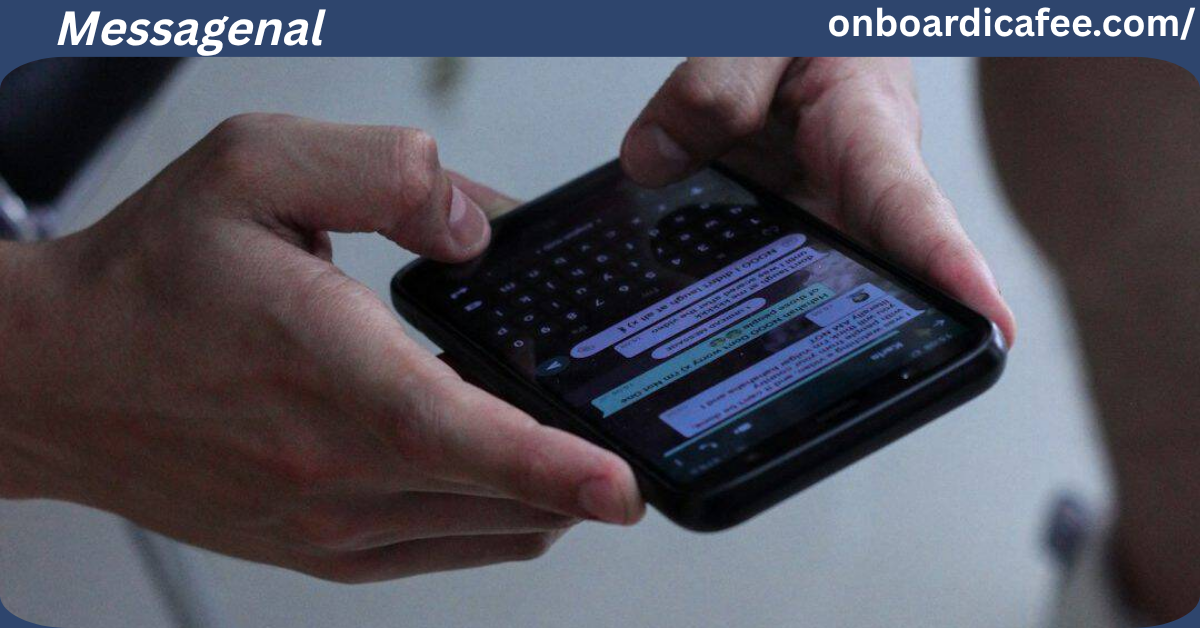
Messagenal: A Complete Guide to Meaning, Communication, Features, Benefits, Uses, and Future
Messagenal is a newer term connected with communication, messaging, and the way people share information in the digital world. The term has become more common in online articles during 2026, but its meaning is still not completely clear. Some websites describe messagenal as a communication approach, while others describe it as a messaging or collaboration platform.
The safest way to understand messagenal is to focus on its common idea: better and more purposeful communication. In this sense, messagenal is about creating messages that are clear, useful, easy to understand, and suitable for the person receiving them.
This idea is important because people now send messages through many different channels. We use text messages, email, workplace chat, social media, video calls, customer-support systems, and collaboration platforms every day.
Sending a message is easy. Making sure the message is understood is much harder.
Messagenal focuses on this difference. Instead of only asking whether a message was sent, it encourages people to think about whether the message achieved its purpose.
For example, a person may send a short message that says, “Send it today.” The receiver may not know what “it” means or what time it is needed. A clearer message could explain exactly what is required and when it should be completed.
That small change can prevent confusion and save time.
What Is Messagenal?
Messagenal is best understood as an emerging term related to clear, intentional, and effective communication. It is not a widely established traditional English word, and there is no single definition that all online sources use.
Several recent articles describe messagenal as a communication philosophy or framework. These sources generally focus on clarity, purpose, audience awareness, emotional understanding, and meaningful results.
Other websites describe messagenal as a digital communication platform that could bring messaging, file sharing, teamwork, and collaboration into one place. However, these platform descriptions are not supported by strong independent evidence showing one widely recognized commercial product behind the name.

Raw Magazine –
For this reason, it is better to separate the idea from the product claim.
As a communication idea, messagenal means thinking about a message before sending it. The sender considers what they want the receiver to understand, what action is needed, and what information is necessary.
Also read:Seekde: A Complete Guide to the AI-Powered Discovery and Learning Platform
A simple messagenal approach can include:
- A clear purpose
- Simple language
- Enough background information
- Awareness of the audience
- A suitable tone
- A clear next step
- The right communication channel
In simple terms, messagenal is not just about sending messages faster. It is about making messages more useful.
Why Is Messagenal Becoming Popular?
Digital communication has become much faster than it was in the past.
People can send information instantly to someone across the country or around the world. Businesses can communicate with customers at any time. Remote teams can work together without being in the same office.
These improvements are helpful, but they have also created a new problem.
People receive too many messages.
An employee may receive emails, text messages, team notifications, calendar alerts, project updates, and customer requests during the same workday. Important information can easily become lost among less important messages.
Messagenal is useful as a concept because it encourages people to focus on communication quality instead of communication volume.
The goal is not to send more messages.
The goal is to send better messages.
The Main Idea Behind Messagenal
The main idea behind messagenal is simple: communication should have a purpose.
Before sending an important message, a person can ask a few basic questions.
What am I trying to say?
Who needs this information?
What does the other person need to do?
Is there enough context?
Could the message be misunderstood?
These questions can make a big difference.
For example, imagine a manager writes:
“Please update this.”
The employee may have to ask:
“What should I update?”
“Which file?”
“When do you need it?”
“Which information should I use?”
A better message could say:
“Please update the sales spreadsheet with the July numbers and send the revised file to me by 3 p.m.”
The second message is more useful because it gives the receiver the information needed to complete the task.
Messagenal and Clear Communication
Clear communication is one of the most important parts of the messagenal idea.
A message does not need to be long to be clear.
In fact, simple messages are often easier to understand.
The goal is to remove unnecessary words while keeping the information that matters.
A clear message should normally make the main point easy to find.
For example:
“Your appointment has been moved from Monday at 10 a.m. to Tuesday at 2 p.m. Please contact us if the new time does not work for you.”
This message is short, but it provides the important information.
Good communication is not about using complicated vocabulary.
It is about making meaning easy to understand.
Messagenal and Purpose
Every important message should have a reason.
The purpose may be to provide information, ask a question, request an action, solve a problem, give an update, or make a decision.
Knowing the purpose makes writing easier.
For example, if the purpose is to ask for information, the message should clearly state the question.
If the purpose is to request an action, the message should explain what needs to happen.
If the purpose is to give an update, the message should focus on what has changed.
Some common communication purposes include:
- Informing someone
- Asking for help
- Giving instructions
- Requesting approval
- Solving a problem
- Sharing an update
- Confirming information
- Building a relationship
- Starting a discussion
Understanding the purpose helps prevent unnecessary information.
Messagenal and Audience Awareness
A message should be written for the person who will receive it.
Different people have different levels of knowledge.
A technical expert may understand specialized terms, while a customer may need a simple explanation.
A manager may want a short summary, while a technical employee may need detailed information.
This means the same information may need to be explained differently to different audiences.
For example, a software engineer might tell another engineer that a system has an API authentication error.
A customer may not understand that phrase.
The customer might instead be told:
“We found a problem that is preventing the system from connecting correctly. Our team is working on it, and we will update you when the problem is fixed.”
Both messages can describe the same situation.
The difference is the audience.
Messagenal and Emotional Awareness
Written messages do not include the same emotional signals as face-to-face conversations.
When people speak, they can hear someone’s voice and see facial expressions.
Text removes many of these signals.
Because of this, a short message can sometimes sound rude even when the sender did not intend to be rude.
For example:
“Send it again.”
This may be a normal request.
However, it can also sound impatient.
A more considerate version might be:
“Could you please send the file again? I’m having trouble opening the version I received.”
The second message gives context and sounds more cooperative.
Emotional awareness is therefore an important part of good digital communication.
Messagenal and Context
Context helps people understand what a message means.
Without context, even simple messages can become confusing.
Imagine receiving this:
“It is ready.”
What is ready?
A report?
A website?
A product?
A meeting?
A payment?
The sender may know exactly what they mean, but the receiver does not.
Adding a few words makes the message much clearer:
“The updated project report is ready for your review.”
This is why context matters.
A good message gives the receiver enough background information to understand the situation without needing to ask several questions.
Messagenal and Timing
Timing can change the meaning and importance of a message.
A message about an emergency should be communicated differently from a routine update.
A customer-support issue may need an immediate response.
A general announcement may not require an instant reply.
A project update may be sent during normal working hours.
Good communication therefore considers when a message should be sent.
It is also important to respect other people’s time.
Not every message needs to be marked urgent.
When everything is treated as urgent, people may stop recognizing genuinely important information.
Messagenal in the Workplace
Workplace communication is one of the most useful areas for applying messagenal principles.
Employees often communicate about projects, deadlines, meetings, customers, problems, and decisions.
Poor communication can slow down work.
A missing detail may force another employee to ask a question.
An unclear responsibility may result in two people doing the same task.
A missing deadline may cause work to be completed too late.
Clear communication can prevent many of these problems.
A useful workplace update can include:
- Current project status
- Work that has been completed
- Problems or risks
- Work that needs to happen next
- The person responsible
- Important deadlines
Not every message needs all of these details. The idea is simply to provide the information that the receiver actually needs.
Messagenal and Remote Work
Remote work makes digital communication especially important.
When employees work in the same office, they can often ask a quick question by walking over to someone’s desk.
Remote workers cannot always do that.
They may depend on email, chat, project-management systems, and video calls.
This makes clear written communication more valuable.
A remote worker may read a message several hours after it was sent. If the message is incomplete, they may have to wait until the sender becomes available.
A complete message can help work continue without unnecessary delays.
This is one reason purposeful communication is useful for remote and hybrid teams.
Messagenal and Asynchronous Communication
Asynchronous communication means people do not have to communicate at exactly the same time.
Email is a common example.
One person sends an email, and the other person responds later.
This can be helpful for remote teams because employees can work across different schedules and time zones.
However, asynchronous communication requires messages to contain enough information.
A person should not have to ask several basic questions before understanding what is needed.
Good asynchronous communication should provide:
- The reason for the message
- Important background information
- The requested action
- The expected deadline
- Any useful supporting files or links
This can reduce unnecessary back-and-forth communication.
Messagenal and Customer Service
Customer service depends heavily on clear communication.
Customers usually want to know what happened, what they should do, and when the problem will be solved.
A vague answer can make a customer more frustrated.
For example:
“We are working on it.”
This does not provide much useful information.
A clearer response could say:
“Our team found the problem and is working on a fix. We expect to have an update by Friday afternoon.”
The second response provides more useful information.
It explains the current situation and gives the customer a reasonable expectation.
Messagenal and Business Communication
Businesses communicate with many different groups.
They communicate with employees, customers, suppliers, partners, investors, and the public.
Each audience needs different information.
Internal employees may need detailed instructions.
Customers may need simple explanations.
Business partners may need specific project information.
Investors may need high-level information about performance and plans.
Good communication considers the needs of each group.
A business that communicates clearly can reduce confusion and build stronger relationships.
Messagenal and Team Collaboration
Teams often need to work on the same projects.
Good communication helps everyone understand what is happening.
One useful approach is to keep project messages organized around specific topics.
For example, a team can separate conversations about:
- Project planning
- Design
- Technical problems
- Customer feedback
- Deadlines
- Final decisions
This can make information easier to find later.
Clear messages also help team members understand decisions that were made while they were offline.
Messagenal and Information Overload
Information overload is a major problem in modern digital communication.
People may receive hundreds of messages and notifications every day.
When there is too much information, people can have difficulty identifying what actually matters.
Messagenal principles can help by encouraging people to communicate with purpose.
Instead of sending five separate messages, a person may be able to send one organized message.
Instead of copying everyone on every email, they can include only the people who need the information.
Instead of marking every message urgent, they can identify truly important matters.
These small changes can reduce digital noise.
Messagenal and Notifications
Notifications can be helpful, but too many notifications can become distracting.
People may stop focusing on important work because they are constantly checking their phones or computers.
A better communication system should help people understand which information requires immediate attention and which information can wait.
Businesses can create simple communication rules.
For example:
Urgent issues may require a phone call or special alert.
Routine updates can be sent through email.
Project discussions can remain in the project channel.
General announcements can be shared through an internal communication system.
This approach can make digital communication easier to manage.
Messagenal and Email
Email remains an important communication method.
It is useful for formal communication, documents, announcements, business records, and messages that do not require an immediate response.
Messagenal principles can make email more effective.
A good email should normally have a useful subject line.
The main purpose should be clear.
Important information should be easy to find.
The requested action should be clearly stated.
The sender should avoid unnecessary details.
For example, instead of writing a long email before explaining the reason, start with the main point.
This helps busy readers understand the message quickly.
Messagenal and Instant Messaging
Instant messaging is designed for fast communication.
It is useful for quick questions, updates, and discussions.
However, instant communication can also encourage people to write without thinking.
A person may send several short messages instead of one complete explanation.
This can create confusion.
A messagenal approach does not mean making every chat message formal.
It simply means thinking about whether the message is clear enough for the receiver.
Messagenal and Social Media
Social media allows people to communicate with very large audiences.
A post can be shared by thousands of people within a short period.
This makes thoughtful communication important.
Before posting something publicly, users should consider whether the information is accurate and whether the wording could be misunderstood.
Public communication also has a longer life than a private conversation.
A message that seems harmless today may be viewed differently later.
Purposeful communication can encourage people to think before posting.
Messagenal and Personal Relationships
Messagenal principles can also be useful in personal relationships.
Friends and family members often use text messages to discuss plans, feelings, and everyday events.
Text can sometimes create misunderstandings because people cannot hear the sender’s voice.
A short response may appear angry when the sender is simply busy.
For sensitive topics, it may help to provide more context.
For example:
“I’m not upset with you. I’m just having a busy day and may take longer to respond.”
This can prevent unnecessary worry.
Good communication is not about writing long messages.
It is about making the intended meaning clear.
Messagenal and Education
Students communicate with teachers, classmates, schools, and study groups through digital tools.
Clear communication can make learning easier.
Also read:888-611-6904: Who Is Calling, Why They Call, and What You Should Do
Instead of sending:
“I need help.”
A student can explain the exact problem.
For example:
“I understand the first two steps of this math problem, but I do not understand how to complete the third step. Could you explain that part?”
This gives the teacher enough information to provide useful help.
The same principle can be used in group projects.
Students should clearly explain who is responsible for each task and when the task should be completed.
Messagenal and Healthcare Communication
Clear communication is especially important in sensitive areas such as healthcare.
Patients need to understand appointments, instructions, medication information, test results, and follow-up steps.
Healthcare organizations also need to communicate accurately with staff.
However, healthcare communication requires extra care.
People should not rely on a general communication framework as a replacement for professional medical guidance.
When health information is important or urgent, people should use appropriate professional channels.
The main lesson is that important information should be written clearly and checked carefully.
Messagenal and Legal Communication
Legal communication also requires precision.
Contracts, notices, agreements, and legal instructions can have serious consequences.
Simple language can help people understand information, but important legal documents should be reviewed by qualified professionals when appropriate.
A communication framework can help organize information, but it does not replace legal expertise.
This distinction is important for responsible use.
Messagenal and Artificial Intelligence
Artificial intelligence is changing the way people create and manage messages.
AI can help write emails, summarize conversations, translate information, create drafts, and organize large amounts of text.
These tools can save time.
However, AI-generated communication still needs human review.
AI may misunderstand context.
It may use the wrong tone.
It may include information that is incomplete or inaccurate.
For important messages, people should check the final text before sending it.
Messagenal principles can actually become more important as AI-generated communication grows because people will need to focus on whether automated messages are useful and appropriate.
Messagenal and Privacy
Privacy is an important part of digital communication.
Messages may contain personal information, business data, financial information, private documents, or other sensitive content.
Users should understand how a communication service handles their information before sharing sensitive material.
This is particularly important when a website or application is unfamiliar.
Because the term messagenal is used by different websites in different ways, users should not assume that every website using the name belongs to one official company.
They should check the website carefully before creating an account or sharing personal information.
Is Messagenal a Real Messaging Platform?
This question needs a careful answer.
Some recent online articles describe messagenal as a unified team communication platform with features such as real-time messaging, file sharing, organized conversations, and integrations.
However, other recent sources specifically describe messagenal as a communication philosophy rather than a software product. One article even points out the contradiction between the two descriptions.
At this time, there is not enough strong independent evidence to confidently present one specific messagenal software platform as an established major messaging service.
This means readers should be careful with articles that list detailed product features, pricing, founders, or security systems without linking those claims to reliable first-party documentation.
What Features Are Often Associated With Messagenal?
Websites that describe messagenal as a platform commonly mention features associated with modern messaging tools.
These may include:
- Instant messaging
- Group conversations
- File sharing
- Notifications
- Search
- Collaboration
- Real-time communication
- Cross-device access
- Project-based conversations
- Integration with other tools
These should be understood as commonly claimed or possible features rather than confirmed features of a verified official messagenal product.
Many existing communication platforms already provide similar functions.
How to Use the Messagenal Approach
You do not need special software to apply the communication principles associated with messagenal.
Start by identifying your purpose.
Ask yourself what you want the receiver to understand.
Then provide the necessary context.
After that, clearly explain what needs to happen.
Finally, check the message before sending it.
A simple process is:
- Decide the purpose.
- Identify the audience.
- Write the main point.
- Add useful context.
- Explain the required action.
- Add a deadline if necessary.
- Check the tone.
- Remove unnecessary words.
- Read the message once.
- Send it through the right channel.
This process is simple enough for everyday use.
Example of Messagenal Communication
Consider this message:
“Need the report soon.”
The message is short, but it is not very useful.
The receiver may wonder which report is needed, what “soon” means, and why the report is important.
A clearer version could be:
“Please send me the updated sales report by 2 p.m. today. I need the final numbers for the management meeting.”
This message is still short.
However, it explains the task, timing, and reason.
That is the basic value of purposeful communication.
Messagenal Communication Checklist
Before sending an important message, ask yourself:
- Is the purpose clear?
- Does the receiver have enough context?
- Is the main point easy to find?
- Have I explained what I need?
- Is the deadline clear?
- Is the tone appropriate?
- Could the message be misunderstood?
- Have I included unnecessary information?
- Is this the right communication channel?
- Does the receiver need to respond?
These questions can help improve almost any type of digital communication.
Benefits of Messagenal Communication
The biggest benefit of the messagenal approach is better understanding.
When people understand messages the first time, they spend less time asking follow-up questions.
Clear communication can also improve productivity.
Employees can complete tasks more easily when instructions are clear.
Customers can solve problems faster when support messages explain the correct steps.
Teams can collaborate more effectively when project information is organized.
Other possible benefits include:
- Less confusion
- Fewer unnecessary messages
- Better teamwork
- Faster problem solving
- Stronger customer relationships
- Better remote collaboration
- Improved workplace communication
- Reduced communication stress
- More organized information
- Better decision-making
These benefits do not require a special application.
They come from using better communication habits.
Possible Limitations of Messagenal
Messagenal also has limitations.
The biggest limitation is that the term itself does not have one universally accepted definition.
Different websites use it in different ways.
Another limitation is that many online descriptions are not supported by strong independent evidence.
People should therefore avoid treating every claim about messagenal as fact.
There is also a practical limitation.
Good communication requires human judgment.
A framework can provide useful guidelines, but it cannot understand every relationship, culture, emotion, or situation.
A message that works well in one situation may not work in another.
Messagenal vs. Traditional Communication
Traditional communication often focuses on sending information.
The sender writes something and sends it.
Messagenal, when understood as a communication approach, focuses more strongly on the result.
The important question becomes:
“Did the other person understand what I meant?”
This changes the way a person writes.
Instead of simply asking whether the message is grammatically correct, they also ask whether the message is useful.
Instead of focusing only on speed, they consider clarity.
Instead of writing for themselves, they think about the receiver.
This is the main difference between simply sending a message and communicating with purpose.
Messagenal vs. Instant Messaging
Instant messaging is a technology.
Messagenal is better understood as a communication idea.
An instant messaging application provides the tools to send messages.
Messagenal principles can influence how those tools are used.
For example, a person can use a chat application poorly by sending unclear and incomplete messages.
The same application can be used effectively by sending organized and purposeful messages.
Therefore, messagenal does not need to replace instant messaging.
It can improve how people use it.
Messagenal vs. Email
Email is useful for formal communication and longer messages.
Messaging applications are often better for quick conversations.
The messagenal approach does not require choosing one technology over another.
Instead, it encourages people to choose the communication method that fits the situation.
A simple question may work well in chat.
A formal business document may be better sent through email.
An urgent problem may require a phone call.
A sensitive personal issue may be better discussed face to face.
Good communication includes choosing the right channel.
Common Messagenal Mistakes
People can make communication mistakes even when they have good intentions.
One common mistake is assuming the receiver knows the background.
Another is using very short messages that leave out important information.
People also sometimes send too many separate messages instead of one organized message.
Other common mistakes include:
- Using unclear language
- Sending messages to the wrong person
- Forgetting deadlines
- Using too much technical language
- Writing when angry
- Sending unnecessary notifications
- Treating every message as urgent
- Failing to explain the next step
- Using the wrong communication channel
Avoiding these mistakes can make communication much easier.
How Businesses Can Improve Communication
Businesses can apply messagenal principles without buying new software.
They can create simple communication guidelines.
Employees can be encouraged to explain the purpose of important messages.
Managers can use consistent formats for project updates.
Customer-service teams can provide complete answers.
Companies can also create rules for urgent communication.
For example, employees may know that urgent problems require a phone call while routine updates should be placed in the appropriate project channel.
Simple rules can reduce communication confusion.
How Managers Can Use Messagenal
Managers communicate with employees every day.
They give instructions, provide feedback, explain changes, and make decisions.
A manager can improve communication by making expectations clear.
Instead of saying:
“Improve the report.”
A manager could say:
“Please add the latest sales numbers, remove the old figures, and update the summary section before Friday.”
The employee now knows what improvement means.
Clear instructions can also make employees feel more confident because they know what is expected.
How Employees Can Use Messagenal
Employees can use the same approach when communicating with managers and coworkers.
When reporting a problem, explain what happened.
When asking for help, explain what has already been tried.
When requesting approval, provide the information needed to make a decision.
When giving an update, explain what has changed.
This can make workplace communication faster and more professional.
How Students Can Use Messagenal
Students can use purposeful communication when contacting teachers and classmates.
Instead of sending a vague question, they can explain the exact problem.
Also read:Xuebaotou: Meaning, Study Culture, Features, Benefits, and the Future of Student Learning
Instead of saying, “What is the homework?” they can ask:
“Could you confirm whether Chapter 5 questions 1 through 10 are due Friday?”
This is easier for the teacher to answer.
Clear communication is especially useful during group projects because students need to divide tasks and agree on deadlines.
How Families Can Use Messagenal
Families can also benefit from clear messaging.
When making plans, include the time and location.
When changing plans, explain the change.
When discussing sensitive issues, avoid writing while angry.
If a message could be misunderstood, provide more context.
These small habits can prevent unnecessary arguments.
Messagenal and the Future of Communication
The future of communication will likely include more artificial intelligence, automation, translation, personalization, and digital collaboration.
Messages will become easier and faster to create.
But faster communication does not automatically mean better communication.
As technology makes it easier to generate text, people may receive even more messages.
This could make clarity and purpose more important.
The underlying idea behind messagenal may therefore remain useful even if the term itself changes.
The future problem will not simply be how to send information.
It will be how to make information meaningful.
Is Messagenal an AI Tool?
There is not enough reliable evidence to describe messagenal as a specific AI tool.
Some websites connect the broader concept with modern technology and AI-assisted communication, but this does not establish messagenal as an official artificial intelligence product.
AI can certainly support the principles associated with messagenal.
It can help summarize messages, improve writing, translate text, and identify action items.
However, users should review important AI-generated communication before sending it.
Is Messagenal Safe to Use?
There is no single verified messagenal platform that allows a universal safety judgment.
If you encounter a website claiming to be an official messagenal service, check it carefully.
Look for:
- Clear company information
- A privacy policy
- Terms of service
- Customer support information
- Transparent ownership
- Independent reviews
- Secure account practices
- Clear information about data handling
One current third-party website check gives messagenal.com a very low trust score and recommends caution, while also noting that the site has a valid SSL certificate. A valid SSL certificate alone does not prove that a website is trustworthy.
This does not by itself prove that the website is fraudulent. It simply means users should not assume that a site is safe without checking further.
Should You Download a Messagenal App?
Users should be careful with any application claiming to be an official messagenal app.
Before downloading an unfamiliar application, check the developer name, app-store information, reviews, privacy details, and official website.
Do not download unknown files simply because they use the messagenal name.
The name alone does not prove that an application is legitimate.
Is Messagenal a Recognized Technology Company?
There is currently not enough reliable evidence to describe messagenal as a major recognized technology company.
Some online pages use the term as the name of a supposed platform, while other sources describe it as a communication concept.
This is why a professional article should avoid inventing details such as a founder, headquarters, funding history, user numbers, or official product features.
Trustworthy content should clearly separate confirmed facts from interpretation.
What Makes Messagenal Useful?
The usefulness of messagenal does not depend on whether it becomes a major software product.
The communication principles connected with the term are already practical.
People need to communicate clearly.
Businesses need better internal communication.
Customers need understandable answers.
Remote workers need good written information.
Students need clear instructions.
Families need thoughtful conversations.
These needs are not going away.
In fact, they are becoming more important as digital communication increases.
The Human Side of Messagenal
Technology is only one part of communication.
People are the other part.
A message may be technically correct but still fail because it does not consider the person reading it.
Someone may be stressed.
Someone may be unfamiliar with the topic.
Someone may be working in another language.
Someone may need more context.
Someone may interpret the tone differently.
The human side of communication is therefore extremely important.
Messagenal, when viewed as a communication philosophy, encourages people to think about meaning rather than simply delivery.
Why Messagenal Is Relevant in 2026
In 2026, people communicate through more digital channels than ever.
AI tools can generate messages.
Businesses use automated customer communication.
Remote teams rely on collaboration platforms.
Social media spreads information quickly.
Notifications compete for attention.
This environment creates a strong need for communication that is intentional and clear.
Recent articles describing messagenal as a communication framework repeatedly focus on this problem of digital noise and the need for clearer communication.
Even if the term remains new, the problem it describes is very real.
Our Analysis of Messagenal
The most important point about messagenal is that communication quality is more important than message quantity.
People sometimes believe that being constantly connected means they are communicating well.
That is not always true.
A person can send hundreds of messages and still leave important information unclear.
A team can have multiple communication applications and still struggle to find important decisions.
A company can send many customer emails and still fail to answer customer questions.
The real value comes from meaningful communication.
That is why the messagenal concept is worth considering.
It shifts attention from how much people communicate to how effectively they communicate.
The Future of Messagenal
The future of the term messagenal is uncertain.
It may continue to develop as a communication framework.
It may become a more widely used term for purposeful digital messaging.
It could also eventually become associated with a specific technology product.
At present, it is too early to make confident predictions.
What is easier to predict is the continued growth of digital communication.
People will continue to send messages.
Businesses will continue to use online communication.
AI will continue to change how messages are created.
Remote work and digital collaboration will continue to require clear written communication.
Because of these trends, the principles associated with messagenal may remain useful regardless of how the word itself develops.
Conclusion
SFM compile may seem difficult at first, but the process becomes easier once you understand how QC files, model files, materials, StudioMDL, and Crowbar work together. Start with a simple model, check your file paths carefully, read compile errors, and test each change step by step. With regular practice and an organized workflow, you can successfully compile custom models and use them in Source Filmmaker for your own videos, animations, and creative projects.
Frequently Asked Questions About Messagenal
What does messagenal mean?
Messagenal is an emerging term associated with purposeful, clear, and meaningful communication. Current online sources do not provide one universally accepted definition.
Is messagenal a messaging app?
Some websites describe messagenal as a messaging platform, but there is not enough strong independent evidence to confirm one widely recognized official messaging application under the name.
Is messagenal a communication philosophy?
Yes, several current sources use messagenal to describe a communication approach focused on clarity, purpose, audience awareness, emotional understanding, and meaningful outcomes.
Why are there different definitions of messagenal?
The term is relatively new and does not have a stable, widely accepted definition. Different websites have therefore interpreted it in different ways.
Is messagenal a software company?
There is not enough reliable evidence to identify messagenal as a widely established software company.