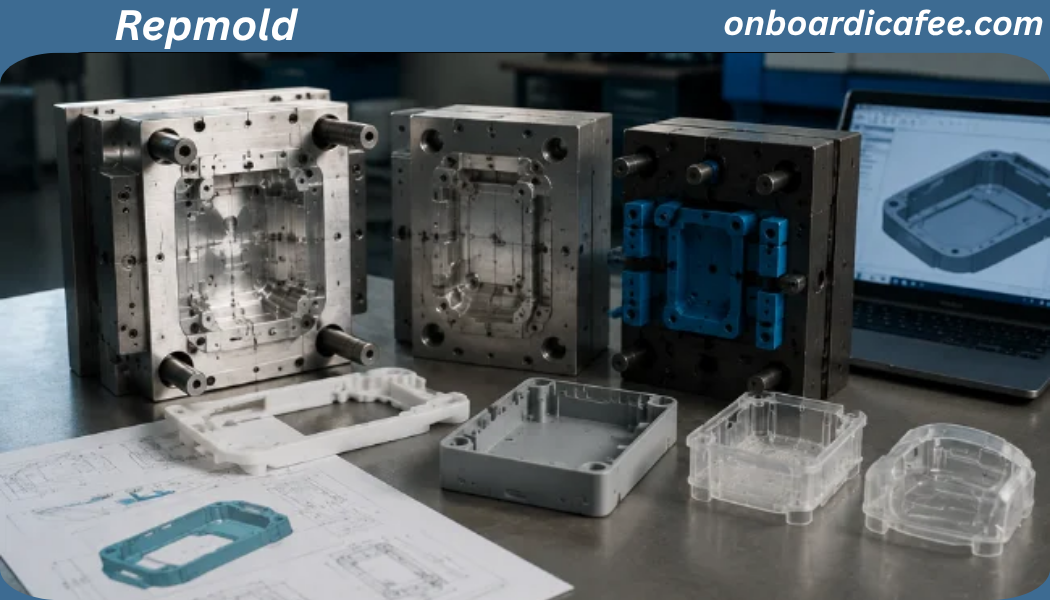
RepMold: The Complete Guide to Digital Mold Manufacturing, 3D Scanning, CAD Design, and Modern Production
RepMold is changing the way manufacturers design and produce molds. Traditional mold-making methods often require weeks of manual work, expensive tooling, and repeated adjustments before a final product is ready. RepMold introduces a smarter workflow by combining advanced digital technologies such as 3D scanning, CAD (Computer-Aided Design), reverse engineering, simulation, and 3D printing into one streamlined process.
As industries continue moving toward digital manufacturing, RepMold has become an important solution for companies looking to reduce production time, improve accuracy, lower costs, and create high-quality molds with fewer errors.
This comprehensive guide explains everything you need to know about RepMold, including how it works, its benefits, applications, future trends, challenges, and why it is becoming a preferred manufacturing solution across multiple industries.
What Is RepMold?
RepMold is a modern digital mold-making process that combines several advanced manufacturing technologies into a single workflow. Instead of relying only on traditional machining and manual measurements, RepMold uses digital data to create precise molds faster and more efficiently.
The process generally includes:
- 3D scanning
- Reverse engineering
- CAD modeling
- Digital simulation
- CNC machining
- 3D printing
- Quality inspection
The goal is simple: create accurate molds with less waste, fewer design mistakes, and shorter production cycles.
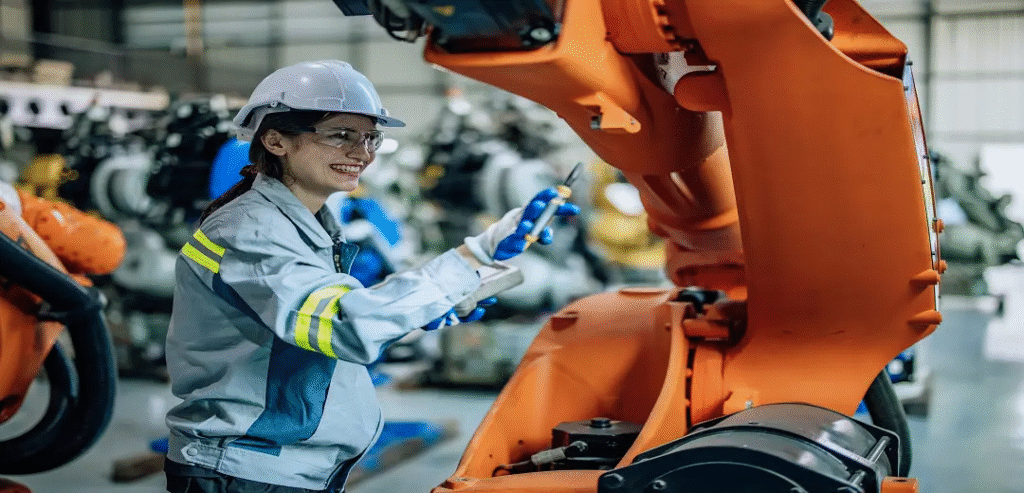
RepMold is particularly valuable for manufacturers producing plastic parts, metal components, medical devices, automotive products, aerospace equipment, and consumer goods.
Why RepMold Is Becoming Popular
Manufacturing is becoming increasingly digital. Companies want products developed faster without sacrificing quality.
RepMold helps achieve these goals because it:
- Reduces manual work
- Improves design accuracy
- Speeds up product development
- Makes prototyping easier
- Supports customization
- Reduces production costs
- Improves repeatability
Businesses that adopt digital mold technologies often gain a competitive advantage because they can respond to customer demands more quickly.
Understanding the RepMold Workflow
RepMold is not a single machine or software program. It is a complete digital manufacturing workflow.
Each step builds upon the previous one.
Step 1: 3D Scanning
The first stage captures the physical object’s exact dimensions.
Modern scanners collect millions of measurement points.
The result is an accurate digital representation called a point cloud.
Benefits include:
- High precision
- Fast measurement
- Complex geometry capture
- Reduced human error
Step 2: Reverse Engineering
After scanning, engineers convert the scan data into usable digital models.
Reverse engineering helps manufacturers recreate existing parts when original drawings no longer exist.
This process is valuable for:
- Legacy products
- Replacement components
- Product improvements
- Competitive analysis
Step 3: CAD Modeling
Engineers then use CAD software to create a complete digital model.
This stage allows designers to:
- Modify dimensions
- Improve performance
- Add manufacturing features
- Correct imperfections
- Prepare production files
Popular CAD systems provide advanced design tools for creating highly detailed molds.
Step 4: Digital Simulation
Before manufacturing begins, software simulates the molding process.
Simulation helps identify problems early.
Examples include:
- Air traps
- Cooling issues
- Material flow
- Shrinkage
- Warping
- Pressure imbalance
Finding problems digitally saves significant time and money.
Step 5: Mold Manufacturing
Once the design is finalized, production begins.
Manufacturers may use:
- CNC machining
- EDM machining
- Hybrid manufacturing
- Metal 3D printing
- Polymer 3D printing
The production method depends on the mold’s material and intended application.
Step 6: Inspection
After manufacturing, quality inspection confirms the mold meets design specifications.
Inspection tools include:
- Coordinate Measuring Machines (CMM)
- Laser scanners
- Optical measurement systems
- Surface analysis equipment
How 3D Scanning Improves RepMold
3D scanning is one of the biggest reasons RepMold performs better than traditional mold-making.
Instead of manually measuring hundreds of dimensions, scanners capture millions of data points within minutes.
Advantages include:
- Better accuracy
- Faster inspections
- Reduced labor
- Improved repeatability
- Easier quality control
This technology also allows damaged molds to be digitally restored.
The Role of CAD in RepMold
Computer-Aided Design forms the foundation of digital manufacturing.
CAD software allows engineers to:
- Build new mold designs
- Edit existing designs
- Analyze strength
- Improve manufacturability
- Generate production drawings
Without CAD, the RepMold workflow would lose much of its flexibility.
Why Reverse Engineering Matters
Many manufacturers still use products developed decades ago.
Unfortunately, original engineering drawings are often missing.
Reverse engineering solves this problem.
Using RepMold, companies can:
- Scan old parts
- Create digital models
- Improve original designs
- Manufacture replacements
This extends product life without redesigning everything from scratch.
Industries Using RepMold
RepMold supports numerous industries.
Automotive Manufacturing
Car manufacturers require thousands of precision components.
RepMold helps produce:
- Dashboard parts
- Engine components
- Interior panels
- Plastic housings
- Lighting assemblies
Faster mold production shortens vehicle development cycles.
Medical Industry
Medical devices require exceptional precision.
RepMold supports production of:
- Surgical tools
- Diagnostic equipment
- Medical housings
- Laboratory devices
- Disposable medical products
Digital quality control helps manufacturers meet strict industry standards.
Consumer Electronics
Electronic products change rapidly.
RepMold enables companies to quickly manufacture molds for:
- Phone accessories
- Wearable devices
- Computer components
- Smart home products
- Gaming equipment
Shorter development times help companies stay competitive.
Aerospace
Aircraft components require extremely high precision.
RepMold supports:
- Lightweight components
- Composite tooling
- Interior panels
- Testing fixtures
- Prototype development
Digital engineering reduces manufacturing risks.
Industrial Equipment
Factories use RepMold to produce:
- Machine covers
- Industrial housings
- Protective casings
- Custom tooling
- Replacement parts
Benefits of RepMold
RepMold offers several advantages over traditional mold manufacturing.
Faster Product Development
Digital workflows reduce weeks of manual work.
Higher Accuracy
Computer-controlled systems minimize human error.
Lower Production Costs
Better planning reduces wasted materials.
Improved Product Quality
Digital simulations identify manufacturing problems before production begins.
Better Repeatability
The same digital files can produce identical molds repeatedly.
Greater Flexibility
Design updates require only software changes rather than rebuilding molds from scratch.
RepMold and 3D Printing
One of RepMold’s greatest strengths is its integration with additive manufacturing.
3D printing supports:
- Rapid prototypes
- Mold inserts
- Test molds
- Functional prototypes
- Low-volume production
Instead of waiting weeks for tooling, manufacturers can test ideas within days.
This greatly accelerates innovation.
Materials Used in RepMold
Different applications require different mold materials.
Common options include:
Aluminum
Advantages:
- Lightweight
- Easy machining
- Fast cooling
- Lower cost
Best for prototype production.
Steel
Advantages:
- Long lifespan
- Excellent strength
- High durability
Ideal for mass production.
Tool Steel
Provides:
- Superior wear resistance
- Heat resistance
- Long production life
Engineering Plastics
Suitable for:
- Prototype molds
- Educational projects
- Low-volume manufacturing
Composite Materials
Some advanced molds use composites to reduce weight while maintaining structural strength.
RepMold Versus Traditional Mold Making
Traditional mold production depends heavily on manual labor and repeated machining.
RepMold introduces automation throughout the process.
Key differences include:
Traditional methods:
- Longer production times
- Greater manual effort
- More redesign work
- Higher material waste
RepMold:
- Digital workflow
- Faster revisions
- Better accuracy
- Improved collaboration
- Lower long-term costs
- Easier documentation
These improvements make RepMold attractive to manufacturers seeking greater efficiency.
Common Applications of RepMold
RepMold is suitable for many manufacturing tasks, including:
- Injection molding
- Blow molding
- Compression molding
- Vacuum forming
- Die casting support
- Prototype tooling
- Manufacturing fixtures
- Production jigs
- Inspection fixtures
- Custom industrial tools
Each application benefits from the combination of digital design and precision manufacturing.
Advanced Technologies That Make RepMold More Powerful
RepMold is more than a digital mold-making process. It continues to evolve as new manufacturing technologies become available. Many companies now combine RepMold with artificial intelligence, cloud computing, robotics, and smart factory systems to improve productivity even further.
These technologies help manufacturers produce better molds with fewer delays and higher consistency.
Artificial Intelligence (AI)
AI is becoming an important part of modern manufacturing.
Within the RepMold workflow, AI can help:
- Detect design errors before production
- Recommend design improvements
- Predict mold wear
- Optimize cooling channels
- Improve material flow
- Reduce production defects
Instead of replacing engineers, AI acts as a decision-support tool that speeds up problem-solving.
Cloud-Based Collaboration
Modern engineering teams often work from different locations.
Cloud platforms allow designers, engineers, quality inspectors, and customers to work on the same digital files in real time.
Benefits include:
- Faster communication
- Better version control
- Easier project management
- Secure data sharing
- Remote collaboration
This reduces delays that often occur when multiple departments work independently.
Digital Twins
A digital twin is a virtual copy of a real mold or manufacturing system.
With RepMold, digital twins help manufacturers:
- Monitor production performance
- Predict maintenance needs
- Test design changes safely
- Improve manufacturing efficiency
- Reduce unexpected downtime
Digital twins are becoming an essential part of smart manufacturing.
RepMold and Industry 4.0
Industry 4.0 refers to the next generation of manufacturing, where machines, software, and people communicate through connected digital systems.
RepMold fits naturally into this environment because every stage of the process is based on digital information.
Industry 4.0 technologies used alongside RepMold include:
- Internet of Things (IoT) sensors
- Automated production systems
- Smart quality inspection
- Machine learning
- Real-time production monitoring
- Predictive maintenance
- Automated reporting
Together, these technologies create factories that are faster, smarter, and more efficient.
How RepMold Supports Sustainable Manufacturing
Sustainability has become a major goal for manufacturers across the United States.
RepMold supports environmentally responsible production in several ways.
Less Material Waste
Digital simulations reduce trial-and-error manufacturing, meaning fewer materials are wasted.
Lower Energy Consumption
Optimized mold designs often require less machining and shorter production cycles.
Longer Mold Life
Improved engineering creates molds that last longer before replacement is needed.
Reduced Scrap
Accurate molds produce higher-quality parts, reducing defective products.
Efficient Resource Planning
Digital workflows help manufacturers order only the materials they actually need.
These improvements not only protect the environment but also reduce operating costs.
Challenges of Implementing RepMold
Although RepMold offers many advantages, companies should understand the challenges involved in adopting a fully digital workflow.
Initial Investment
Advanced scanners, CAD software, CNC equipment, and 3D printers require a significant upfront investment.
Training Requirements
Employees need proper training to use modern engineering software and digital manufacturing tools effectively.
Data Management
Large 3D scan files require organized storage and reliable backup systems.
Software Compatibility
Different software platforms may use different file formats, making compatibility important.
Cybersecurity
Because RepMold relies on digital data, protecting design files from unauthorized access is essential.
Companies that plan carefully can overcome these challenges and achieve long-term benefits.
Best Practices for Using RepMold
Organizations can maximize the value of RepMold by following proven practices.
Invest in High-Quality Scan Data
Accurate scans lead to accurate molds.
Use Standardized Workflows
Consistent processes improve productivity and reduce mistakes.
Validate Designs Early
Simulation software should be used before manufacturing begins.
Maintain Equipment Regularly
Well-maintained scanners, CNC machines, and printers produce better results.
Document Every Project
Detailed documentation makes future modifications much easier.
Encourage Continuous Learning
Technology changes quickly, so ongoing employee training is essential.
How Small Businesses Can Benefit from RepMold
RepMold is no longer limited to large manufacturing companies.
Small and medium-sized businesses are increasingly adopting digital mold-making because equipment and software have become more affordable.
Small businesses can use RepMold to:
- Develop prototypes faster
- Compete with larger manufacturers
- Offer customized products
- Reduce production errors
- Improve customer satisfaction
By starting with simple projects, smaller companies can gradually expand their digital manufacturing capabilities.
RepMold for Product Innovation
Innovation depends on the ability to test ideas quickly.
RepMold supports innovation by allowing engineers to create, modify, and test designs without waiting weeks for traditional tooling.
This makes it easier to:
- Develop new products
- Improve existing products
- Test customer feedback
- Create customized solutions
- Reduce time to market
Companies that innovate faster often gain a stronger competitive position.
The Future of RepMold
The future of RepMold looks promising as manufacturing continues to become more digital.
Several trends are expected to shape the next generation of mold manufacturing.
Smarter Automation
AI-powered systems will automate more engineering tasks while improving design quality.
Improved 3D Printing Materials
New metal and polymer materials will make additive manufacturing even more practical for production molds.
Faster Cloud Collaboration
Engineering teams around the world will collaborate more efficiently using secure cloud platforms.
Greater Use of Robotics
Robots will assist with mold handling, machining, inspection, and finishing operations.
Advanced Quality Control
Machine vision and automated inspection systems will detect defects with greater speed and precision.
More Sustainable Manufacturing
Manufacturers will continue reducing waste, energy consumption, and environmental impact through optimized digital workflows.
These developments will strengthen RepMold’s role in modern manufacturing for years to come.
Why RepMold Matters in Today’s Manufacturing Industry
Manufacturing is becoming increasingly competitive. Companies must produce better products while reducing costs and shortening delivery times.
RepMold addresses these challenges by combining advanced engineering tools into one efficient process.
Its advantages include:
- Faster design cycles
- Higher precision
- Lower production costs
- Better collaboration
- Improved sustainability
- Greater product quality
- Easier customization
- Strong support for Industry 4.0
As digital technologies continue to improve, RepMold is expected to become an even more valuable solution for manufacturers of all sizes.
Expert Insights: Maximizing Success with RepMold
Based on current manufacturing trends, companies achieve the best results when RepMold is treated as a complete digital strategy rather than simply a collection of tools.
Successful organizations focus on:
- Building skilled engineering teams
- Investing in reliable software
- Creating standardized digital workflows
- Using simulation before production
- Continuously improving manufacturing processes
- Collecting production data for future optimization
These practices help companies increase efficiency while maintaining consistent product quality.
Conclusion
RepMold represents a significant advancement in modern mold manufacturing by combining 3D scanning, CAD modeling, reverse engineering, digital simulation, CNC machining, and 3D printing into one connected workflow. This integrated approach enables manufacturers to produce molds with greater precision, shorter lead times, lower costs, and improved quality compared to many traditional methods.
Beyond simply speeding up production, RepMold supports innovation, customization, sustainability, and smarter decision-making through digital technologies. Whether used in the automotive, aerospace, medical, consumer electronics, or industrial manufacturing sectors, it helps businesses respond more quickly to changing market demands while maintaining high engineering standards.
As Industry 4.0, artificial intelligence, cloud collaboration, and additive manufacturing continue to evolve, RepMold is well positioned to remain a key part of the future of manufacturing. Organizations that invest in digital workflows today will likely be better prepared to compete in tomorrow’s increasingly technology-driven production environment.
FAQs
Is RepMold only suitable for large manufacturing companies?
No. While large manufacturers widely use RepMold, small and medium-sized businesses can also benefit from digital mold-making thanks to more affordable software, scanners, and 3D printing technologies.
Can RepMold be used for repairing old molds instead of creating new ones?
Yes. By combining 3D scanning and reverse engineering, RepMold can help analyze worn or damaged molds, allowing engineers to repair, modify, or recreate them with improved accuracy.
Does RepMold work with both metal and plastic molds?
Yes. RepMold supports a wide range of materials, including aluminum, tool steel, stainless steel, engineering plastics, and some composite materials, depending on the application.
How does RepMold reduce manufacturing risks?
It minimizes risks by using digital simulations, virtual testing, and design validation before production begins. This helps identify issues such as poor material flow, shrinkage, or cooling problems early in the process.
What skills are important for professionals working with RepMold?
Professionals typically benefit from knowledge of CAD software, 3D scanning, reverse engineering, CNC machining, additive manufacturing, quality inspection, and basic manufacturing principles. Continuous learning is valuable because digital manufacturing technologies evolve rapidly.