HRMS Globex: Complete Guide to Features, Benefits, Employee Management, and HR Automation
Human resource management is one of the most important parts of running a modern organization. Every business needs a reliable way to manage employee information, attendance, leave, payroll, recruitment, performance, documents, and other workforce activities. When these tasks are handled through separate spreadsheets, emails, paper records, and disconnected applications, HR work can quickly become slow and difficult to manage.
This is where HRMS Globex becomes relevant.
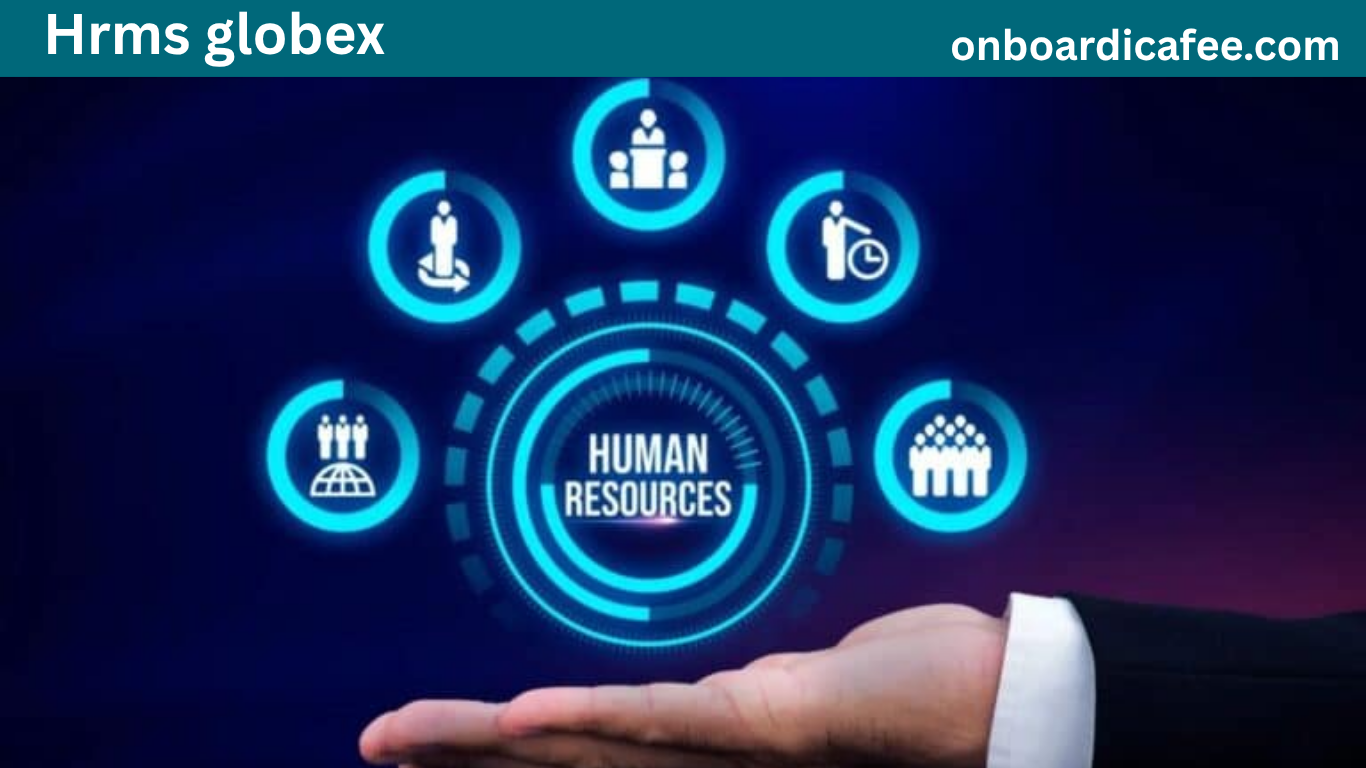
HRMS Globex is described as a complete Human Resource Management System that brings multiple HR responsibilities into a single digital platform. The basic idea behind the system is simple: instead of making HR teams manage employee information and related processes across many different places, an HRMS can centralize important workforce information and make everyday HR activities easier to organize.
For businesses, this type of platform can provide a more structured way to manage people and processes. For employees, it can create a simpler way to interact with HR services, check information, submit requests, and stay connected with workplace processes.
However, it is important to understand that an HRMS is more than a digital employee database. A well-designed human resource management system can become an important part of the entire employee lifecycle, from recruitment and onboarding to attendance, performance management, payroll administration, and eventually employee separation.
This guide explains HRMS Globex in simple language. It explores what the term means, how an HRMS works, which HR functions it can bring together, how employees and HR teams can benefit from centralized management, what organizations should consider before adopting such a platform, and how HR technology is changing the workplace.
Because specific HRMS configurations can vary between organizations, this article focuses on the practical meaning and capabilities of a centralized HRMS rather than presenting unverified features as guaranteed functions of every HRMS Globex account.
What Is HRMS Globex?
HRMS Globex refers to a Human Resource Management System designed around the idea of bringing multiple human resources responsibilities into one platform.
HRMS stands for Human Resource Management System. The purpose of this type of software is to help organizations store, organize, process, and manage employee-related information digitally.
In a traditional workplace, HR information may exist in many places. An employee’s personal information could be stored in one spreadsheet, attendance in another system, leave requests in email, payroll information in accounting software, and performance reviews in separate documents.
This fragmented approach can create unnecessary work.
HRMS Globex represents a centralized approach. Instead of treating each HR responsibility as a completely separate task, the system can connect different areas of workforce management within one broader environment.
The central idea is therefore integration.

Rather than asking HR employees to repeatedly enter the same information into multiple systems, an HRMS can provide a common employee record that supports different HR processes.
This can make HR administration more organized, easier to monitor, and potentially less dependent on manual paperwork.
What Does HRMS Stand For?
HRMS means Human Resource Management System.
The term is sometimes used alongside other expressions, including:
- Human Resources Management System
- HR management software
- Human capital management software
- Employee management system
- Workforce management platform
- HR information system
- HR technology platform
These terms can overlap, but they are not always identical.
An HRMS generally focuses on managing employee information and HR processes. Some platforms are small and focus mainly on employee records, attendance, and leave. Larger platforms can connect recruitment, onboarding, payroll, performance, benefits, reporting, and other workforce functions.
The exact scope depends on the system and the organization’s configuration.
Why Businesses Need an HRMS
Human resources can become complicated as a company grows.
A business with ten employees may be able to manage basic employee information through spreadsheets. A company with hundreds or thousands of workers needs much stronger processes.
As employee numbers increase, HR teams must manage more:
- Employee records
- Departments
- Job roles
- Attendance
- Leave
- Payroll information
- Performance reviews
- Recruitment
- Onboarding
- Employee documents
- Compliance requirements
- Reporting
- Internal communication
Manual processes become harder to maintain as the workforce grows.
An HRMS can help create a central source of information.
This does not mean that software replaces HR professionals. Instead, the technology can handle repetitive administrative tasks so HR professionals have more time for work that requires communication, judgment, planning, and problem solving.
How HRMS Globex Can Centralize HR Operations
The strongest idea behind HRMS Globex is centralization.
Imagine an employee named Sarah.
Without a centralized HR system, Sarah’s information might appear in several files. Her personal details may be stored in an employee spreadsheet. Her attendance may be recorded through a separate attendance system. Her leave requests may be in email. Her performance review may be in a document.
This creates several opportunities for errors.
With a centralized HRMS, the organization can potentially maintain one primary employee record that supports different HR processes.
The result is a more connected workflow.
For example:
Employee information → attendance → leave → performance → payroll-related information → HR reporting.
The exact connections depend on the platform’s configuration, but the principle remains the same.
Employee Information Management
Employee information is one of the most basic functions of an HRMS.
An organization needs accurate records for its workforce. Depending on company requirements and applicable privacy rules, employee records may contain information such as:
- Employee name
- Job title
- Department
- Employment status
- Start date
- Work location
- Manager
- Contact information
- Employment documents
- Compensation-related information
- Leave information
- Performance information
A centralized employee profile can make this information easier for authorized HR personnel to manage.
The major advantage is consistency.
If an employee changes departments, for example, the organization can update the relevant employee record rather than changing information across many unrelated documents.
Employee Self-Service
Employee self-service is an important concept in modern HR software.
Instead of requiring employees to contact HR for every small request, an HRMS can allow employees to access certain information themselves.
Depending on the organization’s setup, employees may be able to:
- View their profile
- Submit leave requests
- Review attendance
- Access documents
- Update permitted personal information
- Check workplace information
- View certain payroll details
- Follow HR requests
This can save time for both employees and HR teams.
However, self-service should always be controlled through appropriate permissions.
Employees should only be able to access information that they are authorized to see.
Attendance Management in HRMS Globex
Attendance is another major HR responsibility.
Organizations need to know when employees work, when they are absent, and how attendance relates to workplace policies.
A digital HRMS can help organize attendance information instead of relying completely on paper registers or spreadsheets.
Depending on the system configuration, attendance management may involve:
- Check-in and check-out information
- Working days
- Absences
- Late arrivals
- Early departures
- Overtime information
- Attendance summaries
- Attendance reports
The important benefit is not simply storing attendance data.
The real benefit comes from connecting attendance with other HR processes.
For example, attendance information may help HR understand leave patterns or prepare administrative reports.
Leave Management
Managing employee leave manually can create unnecessary communication.
An employee may send an email to a manager. The manager may approve it. HR may then update a spreadsheet. Another person may need to update payroll information.
An HRMS can bring these steps into a more structured workflow.
A typical digital leave process may look like this:
Employee submits request → manager reviews request → request is approved or rejected → HR record is updated.
This creates a clear history.
Employees can potentially see the status of their request rather than repeatedly asking HR for updates.
HR teams can also have a better view of employee absences.
Payroll and HRMS Globex
Payroll is one of the most sensitive areas of HR management.
Employees expect their pay to be accurate and delivered on time.
An HRMS can help organize information that supports payroll administration. Depending on the specific system, this may include employee compensation information, attendance data, leave records, deductions, and other payroll-related information.
However, organizations should be careful about assuming that every HRMS provides complete payroll processing.
Some HRMS platforms include payroll as a full module. Others integrate with dedicated payroll systems.
Therefore, businesses considering HRMS Globex should verify exactly which payroll functions are available in their specific environment.
This is particularly important in the United States because payroll requirements can involve federal, state, and local rules.
Performance Management
Performance management is another area where HR software can create structure.
Without a system, performance reviews may exist in individual documents, emails, or manager notes.
A centralized HR platform can potentially help organizations organize:
- Performance goals
- Review schedules
- Manager feedback
- Employee feedback
- Performance records
- Development plans
- Evaluation history
The value is not just digital storage.
A structured system can encourage organizations to make performance management a regular process instead of something that happens only once a year.
Recruitment and Hiring
Recruitment is the beginning of the employee lifecycle.
Organizations need to attract candidates, review applications, conduct interviews, make hiring decisions, and prepare new employees for their roles.
An HRMS may support some or all of these processes, depending on the platform.
Recruitment-related functionality can help HR teams organize candidate information and reduce manual administrative work.
The most important question for businesses is whether recruitment is built directly into the system or whether the HRMS connects with another applicant tracking system.
This distinction can affect how useful the platform is for a company’s hiring team.
Employee Onboarding
Once a candidate accepts a job, onboarding begins.
Good onboarding helps a new employee understand:
- Their role
- Company policies
- Workplace expectations
- Required documents
- Benefits
- Managers
- Team structure
- Technology
- Training requirements
An HRMS can provide a central place for onboarding activities.
This can make the first weeks of employment more organized.
Instead of sending a new employee several unrelated emails, the organization can potentially create a structured onboarding process.
Employee Documents
HR departments handle many documents.
These may include employment agreements, policy acknowledgments, identification documents, benefit information, and other records.
Digital document management can reduce reliance on physical paperwork.
However, sensitive employee documents require strong security controls.
Organizations should consider:
- Encryption
- Access controls
- Audit logs
- Data retention
- Backup procedures
- Permission management
- Secure authentication
A digital HR system is only useful if employee information remains protected.
HR Reporting
HR teams need information to make decisions.
A centralized HRMS can make reporting easier because employee data is stored in a structured environment.
Reports may help organizations understand:
- Workforce size
- Employee turnover
- Attendance
- Leave usage
- Department structure
- Hiring activity
- Performance trends
- Workforce costs
The quality of reporting depends heavily on data quality.
If employee records are incomplete or outdated, reports may produce misleading results.
This leads to an important principle:
Good HR analytics begins with accurate HR data.
Why Data Accuracy Matters in HRMS Globex
An HRMS is only as reliable as the information stored inside it.
If an employee’s job title is incorrect, a report may be wrong.
If attendance data is missing, payroll-related calculations could be affected.
If a manager is not updated after an organizational change, approval workflows may go to the wrong person.
For this reason, implementing HRMS Globex should not be viewed as simply purchasing software.
It should be viewed as creating a system for maintaining accurate workforce information.
Organizations should establish clear responsibility for data maintenance.
Benefits of HRMS Globex for HR Teams
A centralized HRMS can provide several potential advantages.
Reduced Administrative Work
HR teams often spend large amounts of time entering information, answering repetitive questions, and updating records.
Automation can reduce some of this workload.
Better Organization
Centralized records make it easier to locate information.
Improved Employee Experience
Employees can potentially complete common HR tasks without contacting HR for every request.
Faster Reporting
Structured data can make reporting more efficient.
Fewer Manual Errors
Automation can reduce some errors caused by repeated data entry.
Better Visibility
Managers and HR leaders can potentially gain a clearer view of workforce information.
Benefits for Employees
HRMS Globex is not only about HR departments.
Employees can also benefit from a well-designed HRMS.
An employee may want to know:
“How many vacation days do I have?”
“Did my leave request get approved?”
“Is my employee information correct?”
“When is my performance review?”
“Where can I find an HR document?”
A self-service HR system can make answers easier to access.
This creates an important shift in HR management.
Instead of HR being the only gateway to employee information, employees can have controlled access to information relevant to them.
Benefits for Managers
Managers are another important group of HRMS users.
A manager may need information about team attendance, leave requests, performance reviews, employee development, or organizational changes.
A centralized system can give managers a clearer view of their teams.
However, access should always follow the principle of least privilege.
A manager should not automatically receive access to every employee record in the company.
The system should provide the information necessary for the manager’s role without exposing unrelated sensitive data.
HRMS Globex and Remote Work
Remote and hybrid work have changed how organizations manage employees.
A workforce may now be distributed across cities, states, or countries.
Paper-based HR processes become more difficult in this environment.
A cloud-based or digitally accessible HR platform can help employees and HR teams interact without being physically present in the same office.
This can be especially useful for:
- Remote employees
- Hybrid teams
- Distributed companies
- Multi-location organizations
- International workforces
However, remote access also increases the importance of cybersecurity.
The easier a system is to access from different locations, the more important strong authentication and access controls become.
HRMS Globex and Small Businesses
Small businesses sometimes believe HR software is only necessary for large corporations.
That is not always true.
A small business can also benefit from organized employee records and standardized HR processes.
However, the needs of a small business are different.
A company with 15 employees may not need a complex enterprise HR platform.
Its priorities may be:
- Employee records
- Time tracking
- Leave
- Payroll integration
- Basic reporting
- Document management
The best HR system is not necessarily the one with the largest number of features.
It is the one that fits the organization’s actual needs.
HRMS Globex for Growing Companies
Growth creates HR complexity.
A company may start with ten employees and later grow to 100 or 500.
Processes that worked at the beginning may stop working.
For example, a founder might personally approve every leave request at a very small company.
As the company grows, this becomes impractical.
An HRMS can help formalize processes.
Instead of relying on individual memory, the company can establish workflows.
This creates consistency.
How HRMS Can Improve HR Efficiency
Efficiency is not simply about completing tasks faster.
It is about reducing unnecessary work while maintaining quality.
Consider a leave request.
A manual system may involve:
- Employee email
- Manager reply
- HR spreadsheet
- Calendar update
- Employee confirmation
A digital workflow can potentially reduce the number of manual steps.
The goal is not to remove people.
The goal is to remove unnecessary repetition.
That is where HR technology provides real value.
Automation in HRMS Globex
Automation is one of the most important ideas in modern HR software.
Examples of HR automation can include:
- Notifications
- Approval workflows
- Employee reminders
- Onboarding tasks
- Review reminders
- Attendance calculations
- Report generation
- Document workflows
Automation works best when the underlying rules are clear.
If a company has confusing policies, software cannot magically fix them.
Technology can automate a process, but it cannot automatically create a good policy.
HRMS Globex and Employee Privacy
Employee information is highly sensitive.
An HR system may contain personal, financial, employment, and performance-related information.
Organizations must therefore treat HR data carefully.
A responsible HRMS environment should include appropriate:
- User authentication
- Authorization
- Role-based access
- Data protection
- Audit trails
- Secure backups
- Incident response
- Data retention policies
Companies should also understand their legal obligations.
In the United States, employee data can be affected by different federal, state, and industry-specific rules.
Organizations should obtain appropriate legal and compliance advice rather than assuming that software alone guarantees compliance.
Role-Based Access in HRMS Globex
Role-based access is an important security principle.
Not every person needs access to every HR record.
For example:
An employee may see their own information.
Also read:Quikconsole Com: What It Is, How It Works, Features, Safety, and What Users Should Know
A manager may see information related to their direct reports.
An HR administrator may have broader access.
A payroll specialist may have access to compensation-related information.
A system administrator may manage technical settings without necessarily needing access to every sensitive HR record.
The exact configuration should be designed around the organization’s responsibilities and security requirements.
HRMS Globex Login and Access
Users searching for HRMS Globex login information should be careful because HRMS portals are often organization-specific.
A company may provide its employees with a particular portal address, username, password, single sign-on system, or other authentication method.
Employees should use the login address provided directly by their employer or HR department.
They should avoid entering credentials into an unfamiliar website simply because it appears in a search engine.
This is especially important for HR platforms because they can contain highly sensitive employee information.
If login credentials do not work, the safest approach is to contact the organization’s HR or IT support team rather than trying random third-party login pages.
What to Do If HRMS Globex Login Does Not Work
Login problems can have several causes.
Possible issues include:
- Incorrect username
- Incorrect password
- Expired password
- Account not activated
- Browser problems
- Authentication issues
- Network problems
- Temporary service outage
- Incorrect portal address
- Account permissions
Start with simple checks.
Confirm that you are using the correct official portal.
Check your username.
Make sure Caps Lock is not affecting the password.
If the system provides an official password-reset option, use it.
If the problem continues, contact your organization’s authorized support team.
Do not share your password with another person.
HRMS Globex Mobile Access
Many modern HR systems are designed with mobile access in mind, but mobile availability depends on the specific platform and implementation.
Mobile HR access can be useful because employees are not always sitting at a desk.
They may need to:
- Submit leave
- Check schedules
- Review notifications
- Access documents
- Update permitted information
However, mobile access creates additional security considerations.
Employees should protect their phones with a strong screen lock and avoid using HR applications on devices that are not secure.
How to Choose an HRMS
Organizations considering HRMS Globex or another HR platform should begin with business requirements rather than software features.
Ask:
What problems are we trying to solve?
Are employee records scattered across multiple systems?
Are leave requests difficult to track?
Does payroll require repeated manual data entry?
Do managers lack workforce visibility?
Are employees asking HR the same questions repeatedly?
Once the problems are identified, the organization can evaluate whether the HRMS addresses them.
Questions to Ask Before Adopting HRMS Globex
A company should ask the provider or implementation team clear questions.
These can include:
- Which HR modules are included?
- Which features require additional configuration?
- Is payroll supported directly?
- Does the system integrate with existing payroll software?
- Is employee self-service available?
- How does role-based access work?
- How is employee data protected?
- What authentication methods are supported?
- What reports are available?
- How is data backed up?
- What happens if the organization leaves the platform?
- Can data be exported?
- What support is available?
- What is the implementation process?
- How are software updates handled?
These questions are more valuable than simply asking whether the system is “complete.”
Implementation of HRMS Globex
HRMS implementation should be planned carefully.
The first step is usually requirements gathering.
The organization identifies its current HR processes and problems.
Next comes data preparation.
Existing employee records may need to be cleaned before being transferred.
This is an important step.
If a company imports messy data into a new system, the new system will simply contain the same problems in digital form.
After data preparation, the organization can configure workflows, permissions, forms, reports, and other settings.
Testing should happen before full deployment.
Employees and HR staff should test common tasks.
Examples include:
- Employee login
- Leave request
- Manager approval
- Employee information update
- Reporting
- Document access
- Attendance processing
Training Employees to Use HRMS Globex
Even a powerful HR system can fail if users do not understand it.
Training should be simple and role-specific.
Employees do not need to understand every administrative function.
They need to understand the tasks relevant to them.
For example, employees may need training on:
- Login
- Profile updates
- Leave requests
- Attendance
- Documents
- Notifications
Managers may need additional training on:
- Approvals
- Team information
- Performance reviews
- Reports
HR administrators need deeper training.
This approach prevents employees from becoming overwhelmed.
Common Problems With HRMS Implementation
Technology projects can fail for reasons that have little to do with the software itself.
One common problem is poor planning.
Another is incomplete data.
A third is weak employee training.
A fourth is attempting to automate a process that was never clearly defined.
Another issue is lack of executive support.
HR technology affects many parts of an organization, so successful implementation requires cooperation between HR, IT, finance, managers, and employees.
How to Measure HRMS Success
After implementation, organizations should measure results.
Useful indicators can include:
- Time spent on administrative tasks
- Employee adoption rate
- Leave processing time
- Data error rates
- Payroll-related corrections
- Employee satisfaction
- HR ticket volume
- Onboarding completion time
- Report preparation time
The goal should be measurable improvement.
If the HRMS is installed but employees continue using spreadsheets and email for everything, the organization has not achieved the full value of the system.
HRMS Globex and Data Integration
Modern businesses often use many software platforms.
HR may use an HRMS.
Finance may use accounting software.
IT may use identity management.
Recruiting may use an applicant tracking system.
Benefits may use a specialized provider.
The ability to exchange information between systems can therefore be important.
Integration can reduce repeated data entry.
For example, when an employee joins the company, basic information may need to move between HR, payroll, IT, and benefits systems.
A connected ecosystem can make this process more efficient.
The Difference Between HRMS, HRIS, and HCM
These terms are often confused.
Also read:Donna Sicuranza: Her Life, Career, and Long-Standing Work in Feline Animal Welfare
HRIS usually means Human Resources Information System. It often focuses heavily on employee records and HR administration.
HRMS is a broader term commonly used for software that manages multiple HR functions.
HCM means Human Capital Management and can describe a broader approach to managing the entire employee lifecycle, including talent, workforce planning, performance, and other strategic functions.
The boundaries are not always strict.
Software companies may use these terms differently.
Therefore, organizations should focus on actual capabilities instead of choosing a system based only on its label.
HRMS Globex and Artificial Intelligence
Artificial intelligence is increasingly being added to HR technology.
AI can potentially support activities such as:
- Employee questions
- Document analysis
- Reporting
- Workforce insights
- Recruitment assistance
- Drafting HR communications
- Identifying patterns in workforce data
But AI in HR requires caution.
Employee decisions can have serious consequences.
Organizations should not blindly automate hiring, performance, promotion, or termination decisions.
Human review remains important.
AI should support responsible HR decision-making rather than replace judgment.
The Future of HRMS Globex
The future of HR systems is likely to focus increasingly on integration, automation, employee self-service, analytics, mobile access, and intelligent assistance.
Employees expect workplace technology to be as easy to use as the consumer applications they use every day.
HR departments also need better data.
Managers want timely information.
Executives want workforce insights.
Employees want faster answers.
A modern HRMS can help bring these needs together.
However, the future of HR technology will not be determined by the number of features a system has.
Usability, security, data quality, integration, and trust will be just as important.
Why Human Oversight Still Matters
Technology can organize information.
It can calculate numbers.
It can send reminders.
It can automate workflows.
But HR is ultimately about people.
Employees may have unusual circumstances that do not fit neatly into a software workflow.
Managers may need to discuss performance issues personally.
HR professionals may need to handle sensitive workplace situations.
Leadership decisions may require context that cannot be captured in a database.
This is why HRMS Globex should be viewed as a tool for HR professionals, not as a replacement for them.
The Real Value of HRMS Globex
The real value of an HRMS is not simply having everything on one screen.
The deeper value is creating a reliable system for managing the employee lifecycle.
When information is accurate and processes are clear, organizations can make better decisions.
Employees know where to go.
Managers know what action is required.
HR teams spend less time searching for information.
Leadership receives better workforce data.
This is the difference between software that merely stores information and software that improves an organization’s HR processes.
Advantages and Limitations of HRMS Globex
| Area | Potential Advantage | Important Consideration |
| Employee records | Centralized information | Data must remain accurate |
| Attendance | Easier tracking | Rules must be configured correctly |
| Leave | Structured approvals | Policies must be clear |
| Payroll | Can connect HR information with pay processes | Verify exact payroll capabilities |
| Performance | Organized reviews and goals | Human judgment remains important |
| Recruitment | Can improve candidate organization | May require separate recruiting tools |
| Reporting | Faster access to workforce information | Poor data creates poor reports |
| Employee self-service | Less repetitive HR work | Permissions must be carefully controlled |
| Security | Centralized controls | Requires strong implementation |
| Automation | Reduces repetitive tasks | Automation cannot fix poor processes |
Is HRMS Globex Right for Every Business?
Not necessarily.
Every organization has different needs.
A very small company may need only simple employee records and payroll.
A large enterprise may require complex workforce management, global payroll, benefits administration, compliance tools, advanced analytics, and integrations.
The right HRMS is therefore the system that matches the organization’s size, processes, budget, security requirements, and long-term plans.
HRMS Globex may be useful for organizations seeking centralized HR management, but businesses should evaluate its actual capabilities, support, integrations, security controls, and pricing before making a purchasing decision.
Best Practices for Using an HRMS
Organizations can get more value from HRMS technology by following several basic principles.
First, keep employee data accurate.
Second, establish clear access permissions.
Third, train employees properly.
Fourth, automate repetitive processes where automation makes sense.
Fifth, review workflows regularly.
Sixth, protect sensitive HR information.
Seventh, maintain reliable backups and recovery procedures.
Eighth, measure whether the system is actually saving time.
Finally, ask employees for feedback.
The people using the system every day are often the best source of information about what works and what does not.
Final Thoughts on HRMS Globex
HRMS Globex represents the broader shift toward centralized and digital human resource management. By bringing important HR responsibilities into one system, an HRMS can help organizations organize employee information, streamline administrative processes, support employee self-service, improve reporting, and reduce repetitive work. The real benefit, however, does not come simply from having HR software. It comes from using that technology to create clear, accurate, secure, and employee-friendly processes.
For businesses, the best approach is to evaluate HRMS Globex based on real needs rather than simply choosing a platform because it offers many features. Organizations should confirm the exact functions available in their environment, understand how employee information is protected, check integration options, prepare their data carefully, and provide proper training to employees and managers.
For employees, an HRMS can make everyday HR tasks easier by providing a central place for approved services such as employee information, attendance, leave, documents, and other workplace processes. At the same time, users should protect their login credentials and follow their organization’s security procedures.
Ultimately, HRMS Globex should be viewed as a tool that connects people, information, and HR processes. When implemented correctly, an HRMS can reduce administrative friction and give HR teams more time to focus on what technology cannot replace: supporting employees, building strong workplaces, solving people-related problems, and helping an organization grow.
Frequently Asked Questions About HRMS Globex
Is HRMS Globex an HR software platform?
Yes. The term HRMS Globex refers to a Human Resource Management System designed to centralize different HR responsibilities and employee-related processes in one digital environment.
Can employees use HRMS Globex for leave requests?
Leave management is a common function in HRMS platforms, but the exact options available depend on how an organization’s HRMS environment has been configured. Employees should follow their employer’s instructions for submitting and checking leave requests.
Does HRMS Globex handle payroll?
Payroll may be part of an HRMS environment or connected through an integration, but organizations should verify the exact payroll functions available in their specific HRMS Globex setup rather than assuming every account includes the same payroll capabilities.
Is HRMS Globex suitable for small businesses?
It can be, depending on the company’s requirements. Small businesses should compare the system’s features, cost, ease of use, support, and scalability with simpler HR solutions before choosing a platform.
Can HRMS Globex be used for employee attendance?
Attendance management is one of the common responsibilities handled by an HRMS. However, available attendance features and integrations can vary by implementation, so employees should confirm the specific functions enabled by their organization.