Donna Sicuranza: Her Life, Career, and Long-Standing Work in Feline Animal Welfare
Donna Sicuranza is a name closely associated with feline animal welfare in Connecticut. Rather than being known for entertainment, politics, or mainstream celebrity, she has built her public profile through years of nonprofit leadership and practical work helping cats and the people who care for them.
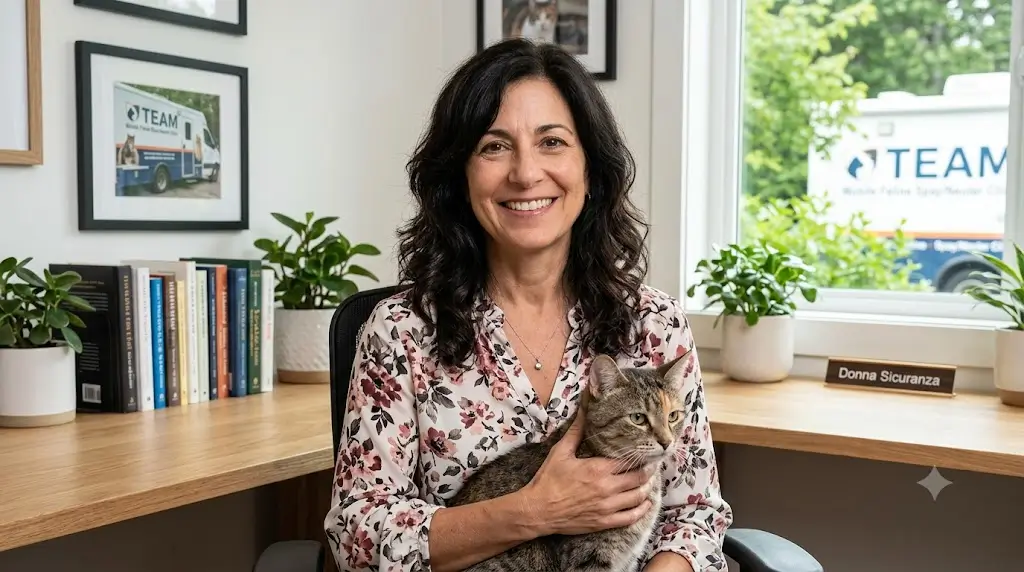
Her name is strongly connected with Tait’s Every Animal Matters, commonly known as TEAM, and especially with the organization’s mobile feline spay/neuter and vaccination program. The program was created to make basic veterinary services more affordable and easier to access for Connecticut residents, including people caring for domestic and feral cats.
One important point is worth clarifying at the beginning. Some online pages describe Donna Sicuranza as the “president” of the TEAM Mobile Feline Unit. Available organizational and government records more consistently identify her as an executive director or representative of Tait’s Every Animal Matters. A 2019 TEAM newsletter identifies Donna Sicuranza as the organization’s Executive Director and says she and the late veterinarian John Caltabiano established the mobile clinic in 1997. Connecticut Department of Agriculture records also identify Sicuranza as a representative of Tait’s Every Animal Matters.
This distinction matters because a good biography should separate verified information from repeated claims found on the internet.
Donna Sicuranza’s story is especially interesting because her work demonstrates how a relatively small nonprofit can address a large community problem. Instead of building a traditional veterinary hospital, TEAM developed a mobile model that takes services directly into communities.
The result has been a long-running effort focused on spaying, neutering, vaccinations, and reducing feline overpopulation.
Who Is Donna Sicuranza?
Donna Sicuranza is an American nonprofit professional best known for her work with Tait’s Every Animal Matters and its TEAM Mobile Feline Spay/Neuter Clinic.
The organization is based in Westbrook, Connecticut, and its work has focused heavily on feline welfare. Sicuranza’s public professional identity is connected to nonprofit management, communication, community outreach, fundraising, and animal welfare.
Unlike many people who become the subject of online biographies, Sicuranza does not have a large public record covering every part of her private life. Most reliable information about her concerns her professional activities and her work with TEAM.

Zonic Magazine
That is actually an important part of understanding her story.
There is a difference between being famous and being influential.
A person does not need to appear on television or have millions of followers to make a meaningful contribution. In Sicuranza’s case, her influence has been connected to a practical problem: unwanted cat births and limited access to affordable veterinary services.
Also read:Fascisterne: Meaning, Fascism, Danish History, Beliefs, and Modern Context
Her work has continued for decades, giving her a long connection with one of Connecticut’s community-based animal welfare programs.
Donna Sicuranza and Tait’s Every Animal Matters
Tait’s Every Animal Matters, usually called TEAM, is the organization most closely associated with Donna Sicuranza.
TEAM’s mission has centered on improving animal welfare and making preventive care more accessible. One of its most recognizable programs is the mobile feline clinic.
The idea behind the clinic is straightforward.
Instead of expecting every cat owner or caretaker to travel to a traditional veterinary facility, the organization takes veterinary services into different communities.
This mobile approach can be particularly useful for people who face challenges such as cost, transportation, distance, or limited access to veterinary services.
TEAM’s 2019 newsletter described the organization as a nonprofit and identified the mobile clinic as Connecticut’s first and only mobile spay/neuter and vaccination clinic for cats at that time. The newsletter said the clinic had been established in 1997 by John Caltabiano, DVM, and Donna Sicuranza.
The Connecticut Department of Agriculture has also listed the TEAM Mobile Feline Unit as a participating veterinary practice in its animal population control program. A 2025 state document lists the facility in Westbrook, Connecticut.
These records help establish that Sicuranza’s connection to TEAM is not simply a claim appearing on biography websites. Her association with the organization is documented through nonprofit and government-related sources.
The Beginning of the TEAM Mobile Feline Clinic
The year 1997 is central to the story of Donna Sicuranza and TEAM.
According to TEAM’s own 2019 newsletter, the mobile feline clinic began operating in 1997. On its first day, the clinic altered 12 cats. Over the following years, the program expanded considerably.
The concept was ambitious for a small nonprofit.
A mobile veterinary program requires much more than a vehicle.
It requires veterinary professionals, equipment, medical supplies, scheduling, transportation, maintenance, communication, funding, volunteers, and a reliable relationship with the communities being served.
It also requires public trust.
People must feel comfortable bringing their animals to a mobile facility for medical procedures.
The long life of the program suggests that TEAM was able to build the systems necessary to keep the service operating over many years.
Donna Sicuranza’s Role in the Early Program
Donna Sicuranza’s role was not limited to simply appearing alongside the clinic.
TEAM’s own materials identify her as Executive Director and credit her with helping establish the mobile clinic with Dr. John Caltabiano.
This distinction is important.
Veterinary procedures require trained veterinary professionals. But nonprofit programs require many other forms of leadership.
Someone has to coordinate the organization.
Someone must communicate with the public.
Someone must help manage funding.
Someone must organize schedules.
Someone must work with donors and supporters.
Someone must explain the mission.
Someone must help keep the program functioning when challenges appear.
Sicuranza’s long-term role appears to have included these broader organizational responsibilities.
The Importance of the Mobile Veterinary Model
The mobile clinic model is one of the most important parts of Donna Sicuranza’s professional story.
Traditional veterinary care is usually delivered in a permanent building.
A mobile clinic changes the equation.
Instead of making the animal owner travel to the service, the service travels closer to the people who need it.
This can reduce practical barriers.
For example, consider a cat owner who lives far away from a veterinary hospital and does not have easy transportation.
Even if the owner cares deeply about the cat, the distance and cost of regular veterinary services may become a problem.
A mobile clinic can make access easier.
The same principle can be especially useful for people caring for feral or community cats.
Why Feline Overpopulation Is a Serious Issue
Feline overpopulation is not simply a problem of having too many cats.
It can create a chain of related challenges.
When cats reproduce without enough homes available, communities may see:
- More homeless kittens
- Increased shelter intake
- Greater demand for rescue organizations
- More abandoned animals
- Increased pressure on animal control agencies
- Greater need for foster homes
- More medical expenses
- Greater competition for limited rescue resources
Spaying and neutering can help prevent unwanted litters.
This is why the focus of TEAM’s mobile clinic is important.
Rather than dealing only with the consequences of overpopulation, the program focuses on prevention.
That is a useful insight into Donna Sicuranza’s work.
The goal is not simply to rescue more cats after they are born.
It is also to reduce the number of unwanted births in the first place.
Donna Sicuranza’s Approach to Animal Welfare
The public record suggests that Sicuranza’s approach has been practical rather than highly publicized.
Her work revolves around a simple idea: provide an important service in a way that ordinary people can access.
TEAM’s 2019 newsletter stated that the mobile clinic was created to make spay/neuter services more affordable and accessible to cat caretakers. It also reported that the program served more than 25 communities across Connecticut at that time and accepted both domestic and feral cats.
This model has several advantages.
First, it focuses on prevention.
Second, it works directly with communities.
Third, it can serve people who may not be able to afford traditional veterinary prices.
Fourth, it can reach people who care for feral cats and community cat colonies.
These elements make the program more than a simple veterinary service.
It becomes a community animal welfare project.
The 200,000-Surgery Milestone
One of the strongest indicators of the program’s scale came in 2019.
TEAM reported that it had completed its 200,000th sterilization surgery. The organization’s newsletter described the milestone as the completion of 200,000 spay/neuter procedures since the clinic began.
That number is difficult to understand without considering the time involved.
From 1997 to 2019 is more than two decades.
Reaching 200,000 procedures means the clinic was not operating as an occasional project.
It had developed into a sustained program.
The newsletter also described the clinic as operating with custom-built mobile vehicles and said the veterinary staff could handle around 35 cats in one of the mobile units.
This illustrates how the organization evolved.
It began with a relatively small mobile operation.
Over time, it developed the capacity to serve a much larger number of animals.
What 200,000 Surgeries Really Mean
The number 200,000 is impressive, but its deeper significance is more important than the number itself.
Every procedure represents an individual animal.
Behind each animal is usually a person, caretaker, rescue worker, or community member.
That means the impact extends beyond the cats themselves.
Spaying and neutering can prevent future litters.
Those future kittens would otherwise need food, shelter, veterinary care, and homes.
So a preventive service can have an impact that extends years beyond the original procedure.
This is why nonprofit animal welfare programs often focus heavily on sterilization.
The Program’s Work With Feral Cats
Another important aspect of TEAM’s work is its acceptance of feral cats.
Feral cats can be difficult to manage because they may not behave like ordinary household pets.
They may live outdoors, avoid people, and form colonies.
Trying to bring every feral cat into a traditional veterinary environment can be difficult.
A mobile clinic can make treatment more practical.
TEAM’s 2019 newsletter explicitly said domestic and feral cats were welcomed by the mobile program.
This makes the program relevant not only to pet owners but also to people involved in community cat care.
Trap-Neuter-Return and Community Cats
Feral cat management is often connected to trap-neuter-return, commonly known as TNR.
The basic concept involves humanely trapping community cats, having them sterilized and vaccinated when appropriate, and returning them to their established environment.
The purpose is to reduce reproduction while managing existing cat populations.
This approach can be controversial in some communities, but it has become an important part of discussions around community cats.
The practical lesson from TEAM’s model is that accessible veterinary services are necessary for any community-based cat management strategy to work.
Without affordable sterilization, prevention becomes much harder.
Donna Sicuranza and Affordable Veterinary Care
Affordability is one of the strongest themes in the public information about TEAM.
In a 2021 interview with Patch, Sicuranza explained that the mobile program aimed to offer services at a lower cost for people who might not otherwise be able to afford them. She also said donations helped keep fees low.
This reveals an important part of nonprofit leadership.
The organization is not simply trying to provide veterinary care.
It is trying to provide it at a price that makes preventive care possible for more people.
That creates a difficult financial balance.
Veterinary medicine costs money.
Vehicles cost money.
Medical equipment costs money.
Fuel, insurance, staffing, maintenance, and supplies all cost money.
A nonprofit must therefore combine service fees with donations and other forms of support.
The Role of Donations in TEAM’s Model
TEAM’s public materials emphasize the importance of donations.
The organization has used donations to help support its ability to provide lower-cost services.
This is a common model for nonprofit animal welfare organizations.
A purely commercial veterinary service generally needs to recover its full operating costs through fees.
A nonprofit can use charitable donations to reduce the amount that must be recovered from each client.
This can create a valuable social benefit.
People who could not afford standard veterinary pricing may still be able to access preventive care.
The challenge is sustainability.
A nonprofit must continuously maintain relationships with donors and supporters.
This is another reason leadership matters.
A successful animal welfare program needs both compassion and organizational discipline.
Donna Sicuranza’s Communication Background
Some public profiles describe Sicuranza as having experience in writing, editing, and public relations.
The official TEAM newsletter provides at least one direct indication of her communications role: it identifies Donna Sicuranza as the editor and includes a message from her to readers.
This is significant because communication is a major part of nonprofit success.
Animal welfare organizations need to explain:
- Why their work matters
- How donations are used
- What services are available
- Where clinics will operate
- How appointments work
- Why spaying and neutering matters
- How people can help
Clear communication turns a mission into community action.
Why Her Communication Work Matters
Imagine a mobile clinic traveling to a community but few people know it is coming.
The veterinary team could be ready.
The vehicle could be prepared.
The equipment could be available.
But without communication, the service may not reach enough people.
This is why nonprofit communications can be just as important as the physical service.
People need information before they can act.
They need to know the location.
They need to understand the price.
They need to know what animals qualify.
They need to know how to make an appointment.
They need to trust the organization.
Donna Sicuranza’s involvement in communications fits naturally into this model.
Donna Sicuranza and Dr. John Caltabiano
The history of TEAM cannot be discussed without mentioning veterinarian John A. Caltabiano.
According to Connecticut Department of Agriculture material, Caltabiano launched the nonprofit TEAM Mobile Feline Unit in 1997 while serving as president of Tait’s Every Animal Matters. The same government publication says he developed the mobile clinic as a spay/neuter and vaccination program for cats. It also identifies Donna Sicuranza as his longtime partner and says she would continue his work at TEAM and FeralStat after his death in 2009.
TEAM’s own 2019 newsletter similarly credits Caltabiano and Sicuranza with establishing the mobile feline clinic.
Their professional partnership appears to have been important to the development of the organization.
Caltabiano brought veterinary expertise.
Sicuranza contributed organizational and communications leadership.
Together, those skills supported a model that required both medical and administrative knowledge.
The Loss of John Caltabiano
John Caltabiano died in 2009 after battling cancer, according to Connecticut Department of Agriculture records.
His death represented a major change for TEAM.
A founder and veterinarian had been lost.
Yet the program continued.
That continuation is significant because nonprofit programs can struggle when a founding leader leaves.
In TEAM’s case, the organization had enough structure and leadership to continue its work.
The state record specifically noted that Sicuranza would continue Caltabiano’s work at TEAM and FeralStat.
This provides important context for understanding her long-term role.
Donna Sicuranza’s Leadership After 2009
Leadership after the loss of a founder is different from starting a project.
A founder may create the original idea.
A long-term leader must preserve and adapt it.
Sicuranza’s continued association with TEAM shows that the organization was able to continue operating after Caltabiano’s death.
The mobile clinic continued serving cats.
The organization continued communicating with communities.
Its programs continued receiving public attention.
This is one of the strongest aspects of Sicuranza’s professional story.
Her role was not limited to the launch period.
It extended into the long-term operation of the organization.
TEAM’s 2019 Milestone and Organizational Growth
The 2019 newsletter gives a useful snapshot of TEAM after more than 20 years.
It reported that the organization had reached its 200,000th sterilization surgery and had expanded beyond its original small mobile clinic. The newsletter said the organization had moved to larger custom-built vehicles and could comfortably handle about 35 cats in one of the mobile units.
This shows an important pattern.
Successful nonprofit programs often grow gradually.
They do not necessarily become large organizations overnight.
Instead, they build capacity through:
- Community trust
- Donor support
- Staff experience
- Better equipment
- Efficient scheduling
- Repeat customers
- Partnerships
- Public education
TEAM’s history reflects this kind of gradual development.
Where TEAM Operates
TEAM is based in Westbrook, Connecticut.
Public state records continue to list the TEAM Mobile Feline Unit in Westbrook. A Connecticut Department of Agriculture document published in 2025 lists the organization at the Boston Post Road location in Westbrook and includes its contact information.
The organization’s mobile model means that its work is not limited to one physical building.
The clinic has historically traveled to communities across Connecticut.
A 2021 Patch report described the clinic visiting locations such as Vernon and Newington and said it had been traveling around the state for more than two decades.
This statewide approach is central to understanding the organization’s impact.
What Services Does the Mobile Clinic Provide?
The services offered by TEAM have included more than sterilization.
Also read:Bropu: Meaning, Features, Safety, Community, and What You Should Know
Its 2019 newsletter described a package that included spay or neuter surgery, vaccinations, a brief exam, nail trimming, and ear mite treatment when needed. It also mentioned parasite and flea prevention and treatment.
A 2021 Patch report similarly described spay/neuter procedures, vaccinations, nail trims, and ear mite treatment among the available services.
The exact services and pricing can change over time, so anyone seeking care should confirm current information directly with TEAM before traveling.
Why Vaccinations Matter
Spaying and neutering address reproduction.
Vaccinations address disease prevention.
Combining the services can make a mobile clinic more useful.
A cat arriving for surgery can also receive appropriate preventive care when available.
This can reduce the number of separate trips required by owners.
For communities with limited veterinary access, that convenience can be meaningful.
However, a mobile spay/neuter clinic should not be viewed as a replacement for a regular veterinarian.
Sicuranza herself told Patch that TEAM was not intended to take anything away from traditional veterinary hospitals and encouraged owners to use regular veterinary services for everyday needs.
That distinction is important.
TEAM Is Not a Substitute for Full Veterinary Care
Preventive surgery and vaccination are important.
But cats may also need:
- Dental care
- Blood tests
- Treatment for chronic diseases
- Emergency care
- Diagnostic imaging
- Long-term medication
- Senior-pet monitoring
- Treatment for injuries
- Specialized surgery
A mobile nonprofit clinic may not provide all of these services.
Therefore, responsible cat ownership still includes having access to a regular veterinarian whenever possible.
TEAM’s model is best understood as an additional resource rather than a complete replacement for veterinary medicine.
Why Donna Sicuranza’s Work Matters
Donna Sicuranza’s significance comes from the scale and duration of the work.
She is associated with a program that has operated since 1997.
TEAM reported reaching 200,000 sterilization procedures in 2019.
More recent online descriptions of the organization report more than 225,000 cats served, although readers should distinguish these newer organizational figures from the independently documented 200,000 milestone in 2019.
The exact current total can change as additional procedures are completed.
The broader point remains clear.
This is a long-running animal welfare program with a substantial history.
The Broader Lesson From Donna Sicuranza’s Career
There is a bigger lesson in Sicuranza’s career.
Social problems often require practical solutions rather than dramatic ones.
Feline overpopulation is not solved by one announcement.
It requires thousands of individual procedures.
It requires people to bring their cats to appointments.
It requires veterinarians to perform surgeries.
It requires organizations to schedule clinics.
It requires donations.
It requires education.
It requires years of consistency.
Sicuranza’s professional story demonstrates the value of this kind of long-term work.
Why Consistency Is Important in Nonprofit Leadership
Many projects begin with enthusiasm.
Far fewer remain active for decades.
Long-term nonprofit work requires consistency.
There will be difficult years.
Funding may become harder.
Equipment may fail.
Staff members may leave.
Costs may increase.
Demand may change.
Community needs may shift.
A leader must keep the organization focused while adapting to these challenges.
TEAM’s continued operation after decades provides an example of this type of organizational endurance.
What Makes the TEAM Model Different?
The most distinctive feature of TEAM is its mobility.
A fixed veterinary clinic waits for clients to arrive.
A mobile clinic moves toward the communities it serves.
That difference can improve access.
It may also help an organization reach people who otherwise delay or avoid veterinary care.
This model is particularly relevant in animal welfare because prevention works best when it is convenient.
If spaying and neutering are difficult to access, people may postpone them.
If services become more accessible, more animals can receive them.
The Human Side of Feline Welfare
Animal welfare is often discussed using numbers.
How many surgeries?
How many cats?
How many communities?
How much money?
But every number represents a real animal.
A cat that receives a preventive procedure may avoid producing several litters.
A family may avoid the financial burden of caring for unwanted kittens.
A community may experience fewer abandoned animals.
A rescue organization may have fewer animals entering its system.
This is why preventive animal welfare can create effects that are difficult to measure immediately.
Donna Sicuranza’s Public Profile
Donna Sicuranza is not a traditional celebrity.
Her public profile is primarily professional.
Most credible information about her concerns TEAM, feline welfare, and nonprofit work.
That means there is relatively little reason to fill gaps in her biography with speculation.
Information about her childhood, private relationships, personal finances, or other aspects of her private life should not be presented as fact unless reliable sources establish it.
This is especially important because several low-quality biography websites currently repeat claims that are not supported by primary evidence.
A professional article should focus on the information that can actually be verified.
Separating Fact From Online Rumors
Searches for Donna Sicuranza can produce conflicting information.
Some newer biography websites repeat personal details that are difficult to verify.
Others confuse different people who share similar names.
This creates a common problem with online biographies.
Once an unsupported claim appears on one website, another website may copy it.
After several copies exist, the claim can look credible even though all of the pages ultimately came from the same unsupported source.
The better approach is to look for primary or authoritative records.
In Sicuranza’s case, useful evidence includes TEAM’s own publications and Connecticut government documents.
Why Primary Sources Matter
Primary sources provide information closer to the original event or organization.
For Donna Sicuranza, examples include:
- TEAM publications
- Connecticut Department of Agriculture records
- Government program documents
- Direct interviews
TEAM’s 2019 newsletter directly identifies Sicuranza as Executive Director and describes the clinic’s history.
Connecticut Department of Agriculture documents also identify her participation in animal population control discussions and connect her to Tait’s Every Animal Matters.
These sources are much stronger than anonymous biography pages.
Donna Sicuranza and Connecticut’s Animal Welfare Community
Sicuranza’s involvement also places her within a wider network of animal welfare professionals.
Also read:Magazineluiza Com Br Email Format: A Complete Guide to Magazine Luiza Email Addresses
The Connecticut Department of Agriculture’s Animal Population Control Program working group included Sicuranza among participants in 2019. The group brought together government officials, animal control representatives, veterinarians, rescue organizations, and other people involved in animal welfare.
This illustrates that TEAM’s work has existed within a larger animal welfare system.
The organization has not operated in complete isolation.
It has interacted with government programs and other animal welfare stakeholders.
The Importance of Public-Private Cooperation
Animal welfare often depends on cooperation between nonprofits, veterinarians, governments, and communities.
Government programs can provide support and structure.
Veterinarians provide medical expertise.
Nonprofits provide community outreach.
Volunteers provide labor.
Donors provide financial support.
Pet owners provide the final piece by bringing animals for care.
TEAM’s history demonstrates how these different parts can work together.
Donna Sicuranza’s Legacy
A person’s legacy is not always a building, award, or famous photograph.
Sometimes it is a system that continues working.
Donna Sicuranza’s professional legacy is closely connected with the continuation of TEAM’s mobile feline care model.
The clinic began in 1997.
It reached a 200,000-surgery milestone in 2019.
State records continue to list the TEAM Mobile Feline Unit among veterinary facilities participating in Connecticut’s animal population control framework.
That continuity is meaningful.
It suggests that the idea created decades ago remains relevant.
What People Can Learn From Donna Sicuranza’s Story
There are several useful lessons in her career.
Long-Term Work Can Create Large Results
A program does not need to become famous overnight.
Small actions repeated for years can create significant results.
Prevention Can Be More Effective Than Reaction
Preventing unwanted litters can reduce future animal welfare problems.
Accessibility Matters
A service is less useful when people cannot reach or afford it.
Communication Is Part of Leadership
People need clear information before they can participate.
Nonprofit Success Requires Teamwork
Veterinarians, administrators, volunteers, donors, and pet owners all contribute.
Reliable Information Matters
A biography should be based on evidence rather than copied internet claims.
What Is Donna Sicuranza Doing Today?
As of 2026, the most reliable public information continues to associate Donna Sicuranza with Tait’s Every Animal Matters and its feline welfare work.
However, current details about her daily activities, personal life, and future plans are not extensively documented through authoritative public sources.
That limitation should be acknowledged rather than filled with guesses.
The available evidence clearly establishes her long-term connection with TEAM.
It also establishes her participation in Connecticut’s animal welfare community.
The organization’s mobile clinic continues to appear in current state veterinary and animal population control records.
Why Donna Sicuranza Deserves Recognition
Recognition does not have to come from mainstream fame.
Donna Sicuranza’s work deserves attention because it represents a different form of leadership.
Her career has been connected to animals that often receive less attention than dogs or highly visible rescue cases.
Cats, especially feral and community cats, can be difficult to manage.
They reproduce quickly.
They can live outdoors.
They can be difficult to capture.
They may not have individual owners.
Their medical needs can easily become community problems.
A program designed specifically around these challenges can therefore have significant value.
Final Thoughts
Donna Sicuranza is best understood as a long-serving nonprofit and animal welfare leader whose public career is closely connected with Tait’s Every Animal Matters and the TEAM Mobile Feline Spay/Neuter Clinic in Connecticut. Available primary and government records identify her as an Executive Director and organizational representative rather than simply relying on the “president” description sometimes repeated online. Her most important contribution has been helping build and sustain a mobile model that brings affordable feline spay, neuter, vaccination, and related services into communities. The clinic began in 1997 and reached its 200,000th sterilization procedure in 2019, showing the remarkable scale of a program built around prevention and accessibility. Her story is ultimately less about celebrity and more about consistency: helping an animal welfare organization continue its mission for decades, supporting access to veterinary care, working with domestic and feral cats, and helping communities address feline overpopulation. For anyone researching Donna Sicuranza today, the most trustworthy approach is to focus on her documented professional work and avoid repeating unsupported claims about her private life. Her public record already tells a meaningful story about nonprofit leadership, practical animal welfare, and the lasting effect that steady community-focused work can have.
FAQs About Donna Sicuranza
Who is Donna Sicuranza?
Donna Sicuranza is a Connecticut nonprofit leader associated with Tait’s Every Animal Matters and its TEAM Mobile Feline Spay/Neuter Clinic. TEAM’s own publication identifies her as Executive Director.
What is Donna Sicuranza known for?
She is best known for her long-term work helping operate and develop TEAM’s mobile feline welfare program, which provides affordable spay, neuter, vaccination, and related services for cats.
When did the TEAM Mobile Feline Clinic begin?
The TEAM Mobile Feline Clinic began in 1997. TEAM’s 2019 newsletter says the clinic was established by the late veterinarian John Caltabiano, DVM, and Donna Sicuranza.
How many cats has TEAM helped?
TEAM reported reaching its 200,000th sterilization surgery in 2019. More recent public descriptions report more than 225,000 cats served, although the exact current total should be confirmed directly with the organization.
Is Donna Sicuranza still connected with TEAM?
Current public information continues to associate Donna Sicuranza with Tait’s Every Animal Matters and its mobile feline welfare work. Connecticut state records published in 2025 continue to list the TEAM Mobile Feline Unit as a participating veterinary facility.