Ace Ventilation: The Complete Guide to Smart Indoor Air Quality, Energy Efficiency, and Home Comfort
Indoor air quality has become one of the most important aspects of modern homes and buildings. People spend nearly 90% of their time indoors, making clean and healthy air essential for comfort, productivity, and overall well-being. Poor ventilation can lead to stale air, excess humidity, mold growth, unpleasant odors, and higher energy bills.
This is where ace ventilation stands out as a modern solution. Unlike traditional ventilation systems that simply move air in and out of a building, ace ventilation uses advanced sensors, smart automation, and energy-efficient technology to maintain healthier indoor air while reducing unnecessary energy use.
As smart home technology continues to evolve, homeowners and businesses are looking for intelligent ventilation systems that can automatically respond to changing indoor conditions. Ace ventilation represents this new generation of ventilation by combining real-time monitoring with automated airflow control.
This comprehensive guide explains everything you need to know about ace ventilation, including how it works, its benefits, installation, maintenance, energy savings, smart technology, future trends, and why it is becoming an increasingly popular solution across the United States.
What Is Ace Ventilation?
Ace ventilation is an intelligent ventilation system that uses sensors and automated controls to improve indoor air quality while reducing energy consumption. Instead of running continuously at the same speed, the system adjusts airflow based on actual indoor conditions.
The goal is simple:
- Deliver fresh outdoor air when needed.
- Remove indoor pollutants.
- Control humidity levels.
- Reduce carbon dioxide buildup.
- Save energy.
- Improve overall indoor comfort.
Unlike older ventilation systems, ace ventilation makes decisions automatically using real-time environmental data.
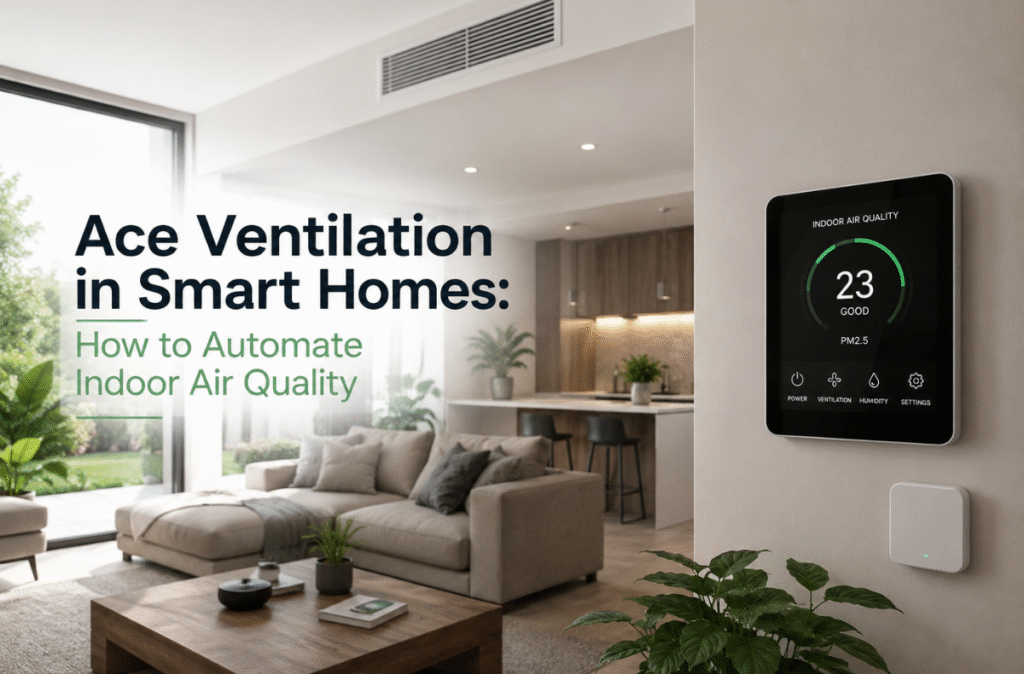
This smart approach creates healthier living spaces without wasting electricity or heating and cooling energy.
Why Indoor Air Quality Matters More Than Ever
Many people assume outdoor pollution is the biggest air quality concern. Surprisingly, indoor air can sometimes contain higher concentrations of pollutants than outdoor air.
Common indoor pollutants include:
- Dust
- Pet dander
- Mold spores
- Cooking smoke
- Cleaning chemicals
- Carbon dioxide
- Volatile Organic Compounds (VOCs)
- Allergens
- Tobacco smoke
- Excess moisture
Without proper ventilation, these pollutants continue building up inside homes and offices.
Ace ventilation continuously helps remove these unwanted particles while bringing in cleaner outdoor air.
How Ace Ventilation Works
The biggest difference between ace ventilation and conventional ventilation is automation.
The system constantly monitors indoor conditions using multiple sensors.
When changes are detected, airflow automatically adjusts.
For example:
If humidity increases after a shower, ventilation speeds up.
If carbon dioxide rises during a family gathering, fresh air increases automatically.
If air quality improves, the system slows down to save energy.
This intelligent response keeps indoor environments comfortable without requiring manual adjustments.
The Science Behind Smart Ventilation
Every occupied building produces heat, moisture, and airborne contaminants.
People breathe.
They cook.
They clean.
They shower.
They use household products.
All these activities affect indoor air quality.
Ace ventilation measures these environmental changes and responds immediately.
Instead of operating according to a fixed schedule, it reacts based on actual indoor conditions.
This approach provides two major benefits:
- Better air quality
- Lower energy consumption
Core Components of an Ace Ventilation System
A complete ace ventilation system usually includes several integrated components working together.
Air Quality Sensors
These sensors continuously monitor indoor conditions.
Depending on the system, they may measure:
- Carbon dioxide
- Humidity
- Temperature
- Fine particles (PM2.5)
- VOCs
- Air pressure
The more information collected, the more accurately the system can optimize airflow.
Smart Controller
The controller acts as the system’s brain.
It receives information from every sensor and decides how much fresh air should enter the building.
Modern controllers can even learn household usage patterns over time.
Ventilation Fans
Energy-efficient fans move stale indoor air outside while introducing fresh outdoor air.
Variable-speed motors allow airflow to increase or decrease as needed.
Air Filters
Filters capture dust, pollen, allergens, and other airborne particles before they circulate indoors.
High-quality filtration greatly improves indoor air quality.
Duct System
Ductwork distributes clean air evenly throughout the home or commercial building.
Proper duct design improves efficiency while reducing noise.
Types of Ace Ventilation Systems
Different buildings require different ventilation solutions.
Common system types include:
Balanced Ventilation
Fresh air enters while stale air exits at nearly equal rates.
This provides consistent airflow throughout the building.
Heat Recovery Ventilation (HRV)
HRV systems recover heat from outgoing air before it leaves the building.
This reduces heating costs during colder months.
Energy Recovery Ventilation (ERV)
ERV systems transfer both heat and moisture.
These systems work especially well in climates with changing humidity levels.
Demand-Controlled Ventilation
Demand-controlled ventilation increases or decreases airflow according to occupancy and air quality measurements.
Ace ventilation often incorporates this technology.
Key Benefits of Ace Ventilation
Improved Indoor Air Quality
The primary goal of ace ventilation is healthier indoor air.
Continuous monitoring removes pollutants before they become significant problems.
Benefits include:
- Cleaner air
- Reduced odors
- Lower allergen levels
- Better breathing conditions
- Fresher indoor environments
Energy Savings
Traditional ventilation systems often run continuously.
This wastes energy when ventilation is unnecessary.
Ace ventilation only operates at higher levels when sensors detect actual demand.
This intelligent operation reduces:
- Heating costs
- Cooling costs
- Electricity consumption
Over time, homeowners may notice meaningful reductions in utility expenses.
Better Humidity Control
High humidity contributes to:
- Mold
- Mildew
- Condensation
- Structural damage
Low humidity can cause:
- Dry skin
- Irritated eyes
- Static electricity
Ace ventilation helps maintain healthier humidity levels throughout the year.
Greater Comfort
Fresh air improves overall comfort.
Rooms feel less stuffy.
Odors disappear more quickly.
Temperature remains more consistent.
Many homeowners notice their indoor environment simply feels healthier.
Health Advantages of Ace Ventilation
Cleaner indoor air affects more than comfort.
It supports better health.
Potential benefits include:
- Easier breathing
- Reduced allergy symptoms
- Improved sleep quality
- Better concentration
- Lower exposure to airborne pollutants
- Healthier indoor environments for children and older adults
While ventilation alone cannot eliminate every health risk, it plays an important role in maintaining cleaner air.
Why Smart Sensors Make a Difference
Sensors are what separate ace ventilation from traditional systems.
Instead of relying on guesses, the system makes decisions using actual measurements.
Modern sensors may detect:
- Rising humidity after cooking
- Carbon dioxide during meetings
- Increased VOCs after painting
- Airborne particles from wildfire smoke
- Temperature fluctuations
- Occupancy levels
This data-driven approach creates much more efficient ventilation.
Automation Eliminates Guesswork
Many homeowners forget to turn ventilation systems on or off.
Ace ventilation solves this problem through automation.
The system automatically:
- Increases airflow
- Reduces airflow
- Maintains target humidity
- Conserves energy
- Responds to changing conditions
No constant manual adjustment is required.
Residential Applications
Ace ventilation fits many residential settings.
Examples include:
- Single-family homes
- Apartments
- Condominiums
- Townhouses
- Luxury homes
- Smart homes
- Newly constructed houses
- Energy-efficient homes
As modern homes become more airtight, proper ventilation becomes even more important.
Commercial Applications
Businesses also benefit from intelligent ventilation.
Common commercial applications include:
- Office buildings
- Retail stores
- Hotels
- Restaurants
- Schools
- Medical offices
- Fitness centers
- Warehouses
Better indoor air contributes to healthier employees and more comfortable customers.
How Ace Ventilation Supports Smart Homes
Smart homes rely on connected devices working together.
Ace ventilation integrates well with this ecosystem.
Depending on the system, users may monitor or control ventilation through:
- Smartphone apps
- Smart thermostats
- Voice assistants
- Building automation systems
- Remote monitoring platforms
Automation makes ventilation nearly effortless while maintaining healthier indoor conditions.
Environmental Benefits
Energy efficiency also benefits the environment.
Because ace ventilation reduces unnecessary energy use, it can help lower a building’s overall carbon footprint.
Additional environmental benefits include:
- Reduced electricity consumption
- Improved HVAC efficiency
- Lower greenhouse gas emissions
- Better resource management
- Longer HVAC equipment lifespan
These advantages support both sustainability goals and long-term operating savings.
Why Ace Ventilation Is Becoming More Popular
Several trends are driving increased interest in smart ventilation systems.
These include:
- Greater awareness of indoor air quality
- Rising energy costs
- Growth of smart home technology
- Increased focus on healthy buildings
- Better sensor technology
- More energy-efficient construction
- Government support for energy conservation
As these trends continue, demand for intelligent ventilation systems is expected to grow across residential and commercial markets.
Installation Process of Ace Ventilation
Installing an ace ventilation system requires careful planning. Every building has different ventilation needs based on its size, layout, climate, insulation, and occupancy. A properly designed system performs better, lasts longer, and provides greater energy savings.
A typical installation process includes:
Step 1: Indoor Air Assessment
The first step is to evaluate the building’s current air quality and ventilation performance. Professionals may measure:
- Carbon dioxide levels
- Humidity
- Airflow
- Temperature
- Existing ventilation capacity
- HVAC efficiency
This assessment helps determine the most suitable ace ventilation solution.
Step 2: System Design
The ventilation system is then designed according to the building’s requirements.
Important factors include:
- Number of rooms
- Occupancy
- Climate zone
- Building size
- Existing HVAC equipment
- Energy goals
A customized design ensures balanced airflow throughout the property.
Step 3: Equipment Installation
The main equipment is installed, including:
- Ventilation unit
- Smart sensors
- Air ducts
- Control panel
- Filters
- Exhaust vents
- Fresh air intake
Proper installation is essential for maximum efficiency.
Step 4: Sensor Calibration
Once installed, the sensors are calibrated to ensure accurate readings.
The system learns how the building behaves under normal conditions and adjusts its operation accordingly.
Step 5: Performance Testing
Before the installation is complete, the system is tested to confirm:
- Proper airflow
- Accurate sensor readings
- Balanced ventilation
- Quiet operation
- Automated controls
- Energy-efficient performance
Testing helps identify any adjustments that may improve overall efficiency.
Maintaining an Ace Ventilation System
Routine maintenance keeps the system operating efficiently and extends its lifespan.
Fortunately, maintenance requirements are generally simple.
Replace Air Filters
Filters collect dust, pollen, and airborne particles.
Replacing them regularly helps maintain clean airflow and prevents unnecessary strain on the system.
Clean Air Vents
Blocked vents reduce airflow.
Keeping vents clean allows fresh air to circulate freely throughout the building.
Inspect Sensors
Sensors should remain clean and unobstructed.
Dirty sensors may provide inaccurate readings that affect system performance.
Check Ductwork
Leaks or blockages inside ducts reduce efficiency.
Periodic inspections help maintain balanced airflow.
Schedule Professional Inspections
Annual inspections allow technicians to verify:
- Fan performance
- Sensor accuracy
- Motor condition
- Electrical components
- Airflow balance
Preventive maintenance helps avoid costly repairs later.
Energy Savings and Return on Investment
Many homeowners ask whether ace ventilation is worth the investment.
Although installation costs vary, long-term savings often offset the initial expense.
Potential financial benefits include:
- Lower heating bills
- Reduced cooling costs
- Less electricity consumption
- Improved HVAC efficiency
- Longer equipment life
- Reduced repair expenses
Buildings that previously suffered from excessive ventilation often see noticeable improvements in energy efficiency after upgrading to an automated system.
Ace Ventilation vs. Traditional Ventilation
Understanding the differences between smart and traditional systems helps homeowners make informed decisions.
| Feature | Ace Ventilation | Traditional Ventilation |
| Airflow Control | Automatic | Manual or Fixed |
| Sensors | Yes | Usually No |
| Energy Efficiency | High | Moderate |
| Air Quality Monitoring | Continuous | Limited |
| Humidity Control | Automatic | Minimal |
| Smart Home Integration | Available | Rare |
| Operating Cost | Lower Over Time | Often Higher |
| Comfort Level | Consistent | Variable |
The biggest advantage of ace ventilation is its ability to respond automatically to changing indoor conditions instead of operating continuously.
Common Mistakes to Avoid
Even advanced ventilation systems can underperform if used incorrectly.
Also read:Claude Edward Elkins Jr: A Complete Guide to His Background, Life, Career, and Public Interest
Some common mistakes include:
Ignoring Filter Replacement
Dirty filters reduce airflow and increase energy use.
Blocking Air Vents
Furniture, curtains, or storage items should never block ventilation openings.
Disabling Automation
Manual operation removes many of the energy-saving benefits.
Skipping Maintenance
Small issues can become expensive repairs if ignored.
Choosing the Wrong System Size
Oversized or undersized systems may reduce comfort and efficiency.
Professional planning helps avoid these problems.
How Ace Ventilation Supports Healthier Living
Indoor air quality affects people every day.
Cleaner indoor air may contribute to:
- Better sleep
- Improved concentration
- Reduced exposure to pollutants
- More comfortable indoor temperatures
- Lower humidity-related problems
- Fresher living spaces
Families with children, older adults, or individuals sensitive to allergens often benefit the most from consistent ventilation.
The Role of Smart Technology
Modern ventilation is becoming increasingly intelligent.
Many ace ventilation systems now include features such as:
- Wi-Fi connectivity
- Mobile app controls
- Remote monitoring
- Energy usage reports
- Predictive maintenance alerts
- Automatic scheduling
- Weather-based adjustments
These features allow homeowners to monitor indoor air quality from virtually anywhere.
Future Trends in Smart Ventilation
The ventilation industry continues evolving rapidly.
Several innovations are expected to shape future systems.
Artificial Intelligence
AI will analyze indoor air patterns and make increasingly accurate ventilation decisions.
Machine Learning
Systems may learn household routines and automatically optimize airflow based on daily habits.
Better Air Quality Sensors
Future sensors will detect even smaller airborne pollutants with greater accuracy.
Renewable Energy Integration
Ventilation systems may work alongside solar-powered homes to maximize energy efficiency.
Predictive Maintenance
Instead of waiting for failures, systems may notify homeowners before maintenance becomes necessary.
Health Monitoring Integration
Future smart homes could combine ventilation data with health devices to create even healthier indoor environments.
Why Proper Ventilation Supports Sustainable Homes
Sustainability involves reducing energy waste while improving quality of life.
Ace ventilation contributes by:
- Using only the airflow needed
- Reducing unnecessary HVAC operation
- Improving heating efficiency
- Lowering cooling demand
- Extending equipment life
- Supporting energy-conscious building design
These advantages make smart ventilation an important part of environmentally responsible construction.
Expert Analysis: Is Ace Ventilation Worth It?
From an expert perspective, ace ventilation represents a significant improvement over conventional ventilation systems.
Traditional systems often waste energy because they operate according to fixed schedules rather than actual indoor conditions.
Ace ventilation changes this approach by allowing sensors and automation to determine when fresh air is truly needed.
This creates a balance between comfort, health, and energy efficiency.
For homeowners, the greatest value lies not only in lower utility bills but also in maintaining consistently healthier indoor air.
For businesses, improved indoor environments may support employee comfort, productivity, and customer satisfaction.
As buildings become more airtight and energy-efficient, intelligent ventilation is likely to become a standard feature rather than an optional upgrade.
How to Choose the Right Ace Ventilation System
Before purchasing a system, consider the following factors:
- Home or building size
- Local climate
- Number of occupants
- Existing HVAC system
- Desired smart features
- Filter quality
- Noise level
- Energy efficiency ratings
- Warranty coverage
- Installation support
Choosing the right system ensures better long-term performance and value.
Best Practices for Getting the Most from Ace Ventilation
To maximize the benefits of your system:
- Replace filters on schedule.
- Keep vents unobstructed.
- Monitor indoor humidity.
- Schedule annual inspections.
- Use automation instead of manual settings.
- Keep sensors clean.
- Pair the system with an energy-efficient HVAC unit.
- Review energy reports if available.
- Update system software when recommended.
- Address maintenance alerts promptly.
These simple practices help maintain excellent indoor air quality while minimizing operating costs.
The Future of Ace Ventilation
Demand for healthier indoor environments continues to grow across homes, offices, schools, and commercial buildings. As technology advances, ace ventilation is expected to become even more intelligent, offering better integration with smart home ecosystems, renewable energy systems, and advanced air quality monitoring.
Future improvements in sensors, automation, and artificial intelligence will likely make ventilation systems more accurate, efficient, and user-friendly than ever before.
For homeowners and businesses seeking cleaner air, lower energy bills, and greater comfort, ace ventilation represents a practical investment in both health and sustainability.
Conclusion
Ace ventilation is more than a traditional ventilation system it is a smart approach to creating healthier, more energy-efficient indoor spaces. By combining advanced sensors, automation, and intelligent airflow management, it helps reduce indoor pollutants, control humidity, improve comfort, and lower energy consumption.
Whether installed in a home, office, school, or commercial building, ace ventilation adapts to changing indoor conditions in real time, providing fresh air only when it is needed. This not only improves indoor air quality but also reduces unnecessary heating and cooling costs.
As smart building technologies continue to evolve, intelligent ventilation systems will play an increasingly important role in creating sustainable, healthy, and comfortable indoor environments. For property owners looking to invest in long-term comfort, efficiency, and better air quality, ace ventilation offers a forward-thinking solution that aligns with the future of modern living.
Frequently Asked Questions
Can ace ventilation help reduce indoor odors?
Yes. By continuously replacing stale indoor air with fresh outdoor air, ace ventilation helps remove cooking smells, pet odors, smoke, and other unpleasant indoor odors before they build up.
Is ace ventilation suitable for older homes?
Yes. Many older homes can benefit from ace ventilation, especially after renovations or energy-efficiency upgrades. A professional assessment can determine the best system for the home’s layout and airflow needs.
Does ace ventilation work during every season?
Yes. Smart ventilation systems are designed to operate year-round. They automatically adjust airflow according to indoor conditions, making them effective during both hot summers and cold winters.
Can ace ventilation improve the efficiency of an HVAC system?
Yes. By reducing unnecessary heating and cooling losses and maintaining balanced airflow, ace ventilation can help HVAC systems operate more efficiently and experience less wear over time.
How does ace ventilation prepare homes for future smart technology?
Ace ventilation is designed to integrate with modern smart home systems, allowing homeowners to monitor air quality, receive maintenance alerts, and automate ventilation alongside other connected devices. This makes it a valuable addition to future-ready homes.