Messeregge Explained: Meaning, Uses, Benefits, and Modern Agricultural Applications
Messeregge is a German agricultural term that refers to a specialized soil-working implement commonly translated as a knife harrow or blade harrow. The word may look unfamiliar to English-speaking readers, especially in the United States, but the idea behind it is quite practical. A Messeregge uses knife-like cutting elements to work the upper layer of cultivated soil, helping farmers prepare a more even surface for planting and manage clods, residue, and light surface problems.
The German word can be understood by looking at its parts. “Messer” means knife, while “Egge” means harrow. In agricultural machinery terminology, the combined word points toward a harrow that works with knife or blade-like elements. German agricultural machinery documentation also uses Messeregge as a specific implement type rather than as a general word for every harrow.
The subject has become more confusing because several recent websites have attached unrelated meanings to the keyword. Some online pages describe Messeregge as a digital concept, a trade-show system, a place, or even a food. Those interpretations should not be treated as established agricultural meanings. Current agricultural machinery listings and manufacturer documentation support the farming-related meaning of Messeregge.
For farmers and agricultural readers, the important question is therefore not simply “What does Messeregge mean?” but also “What does this implement actually do, where does it fit into soil preparation, and when might it make sense?”
This guide answers those questions in simple English. It explores the meaning and origin of Messeregge, how it works, its main uses, advantages and limitations, comparison with other tillage tools, soil-management considerations, maintenance, safety, modern farming applications, and practical factors to consider before choosing this type of equipment.
What Is Messeregge?
A Messeregge is a type of agricultural harrow or shallow soil-working implement that uses knife-like blades or cutting elements.
Its main purpose is controlled surface cultivation.
Instead of aggressively turning over a large amount of soil, the implement works close to the surface. Depending on the specific machine, design, adjustment, soil condition, and operating system, it can help break clods, level the soil surface, distribute residue, and create a more suitable seedbed.
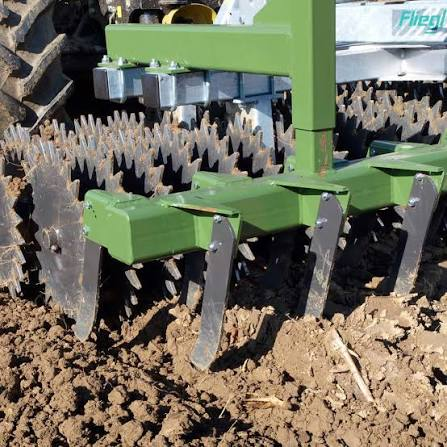
The exact construction varies between manufacturers and models.
Some versions are designed as front-mounted tools. Others may be integrated into larger cultivation or seeding systems. Manufacturer documentation shows that Messeregge equipment can be combined with rollers or other front-mounted implements as part of a broader field-preparation system.
Also read:Kibard Meaning: What It Means, Why People Type It, and the Correct Word
This flexibility is one reason the term can appear in different agricultural machinery catalogs.
Messeregge Meaning in English
The simplest English translation of Messeregge is “knife harrow.”
“Blade harrow” can also communicate the basic idea to English-speaking readers.
The translation is useful because it immediately describes the machine’s working principle.
A knife or blade is designed to cut.
A harrow is used to work the soil.
A Messeregge combines these ideas in an agricultural implement.
It should not, however, be confused with an ordinary hand-held knife or garden tool.
A Messeregge is agricultural machinery or an agricultural attachment designed for field operations.
Understanding the German Word Messeregge
German often creates compound words by combining smaller words into a more specific term.
In this case, the agricultural meaning is connected with “Messer” and “Egge.”
“Messer” means knife.
“Egge” means harrow.
This makes the agricultural interpretation much clearer than some alternative explanations that have appeared online.
It is also important not to confuse “Messer” with the German word “Messe,” which can mean a trade fair or exhibition.
The two words look similar, but they are not the same.
That difference matters when researching Messeregge.
Why the Meaning of Messeregge Has Become Confusing Online
Unusual keywords often attract pages that make assumptions about their meaning.
Messeregge is a good example.
Some websites have attempted to connect the word with exhibition design because of the similarity between “Messe” and “Messer.” Other pages have presented fictional locations or modern digital concepts under the same keyword.
However, agricultural documentation provides a much stronger basis for understanding the actual word.
German agricultural equipment documentation explicitly uses the term Messeregge in connection with soil-working machinery. One Kerner operating manual, for example, distinguishes a Messeregge from a spring-tine harrow and describes specific adjustment and field-use instructions for the Messeregge.
That is much stronger evidence than a newly created blog description.
How a Messeregge Works
The basic working principle is relatively simple.
The machine moves across cultivated ground.
Its knife-like working elements enter the upper soil layer.
As they move through the soil, they can cut, break, disturb, and redistribute material near the surface.
The result can be a more even field surface and better preparation for the next farming operation.
The machine is not intended to perform every kind of tillage.
Its strength is controlled surface work.
This makes it particularly interesting when a farmer wants to improve the seedbed without carrying out unnecessarily aggressive cultivation.
The Importance of Shallow Soil Work
Soil is not simply a pile of dirt.
It is a complex living system containing:
- Minerals
- Organic matter
- Water
- Air
- Microorganisms
- Plant roots
- Soil aggregates
Deep or aggressive tillage can change soil structure significantly.
Sometimes that is necessary.
Sometimes it is not.
A shallow tool such as a Messeregge can be useful when the farmer wants to address a surface problem without disturbing deeper layers more than necessary.
This is one reason the implement can fit into reduced-tillage systems.
Messeregge and Seedbed Preparation
One of the most important applications of Messeregge equipment is seedbed preparation.
A seedbed should generally provide suitable conditions for seed placement and early crop growth.
Problems can occur when the field contains:
- Large clods
- Uneven soil
- Surface crusting
- Poorly distributed residue
- Small ridges
- Shallow surface compaction
- Uneven moisture conditions
A knife harrow can help improve the upper soil surface before planting, depending on field conditions and the rest of the tillage system.
The goal is not to create a perfectly smooth field simply for appearance.
The goal is to create a practical soil environment that supports the next operation.
Why Seedbed Uniformity Matters
Seed needs suitable contact with soil.
If the seedbed is too rough, seed placement can become inconsistent.
If the surface is excessively compacted, emergence may suffer.
If large clods remain in the seed zone, the planter or seeder may have difficulty maintaining uniform conditions.
A properly selected shallow harrow can help manage some of these problems.
However, equipment should always be adjusted to actual soil conditions rather than used simply because a certain depth or speed worked somewhere else.
Messeregge for Breaking Soil Clods
Soil clods can form during cultivation, particularly when soil is worked at unsuitable moisture levels.
Large clods can create uneven planting conditions.
The knife elements of a Messeregge can help break or cut through surface material.
The effect depends heavily on:
- Soil moisture
- Soil type
- Working depth
- Travel speed
- Blade design
- Blade spacing
- Field condition
- Machine weight
This is why there is no single setting that works for every farm.
Messeregge for Surface Leveling
A second important use is surface leveling.
Fields may develop small ridges and irregularities during previous operations.
A shallow harrow can redistribute some loose material and reduce surface variation.
This can make the following planting operation easier.
The objective is controlled leveling rather than deep restructuring.
Messeregge and Crop Residue
Crop residue plays an important role in soil management.
Residue can protect soil from erosion, reduce evaporation, and contribute organic matter as it decomposes.
At the same time, excessive or poorly distributed residue can create problems for planting equipment.
A Messeregge can help cut or redistribute some surface residue, depending on its design.
This can improve the uniformity of the seedbed without necessarily burying all residue.
That balance can be valuable in conservation-oriented farming systems.
Residue Management Requires Balance
Farmers should avoid assuming that all residue must be removed.
Residue can provide many benefits.
Too much surface residue can sometimes interfere with planting.
Too little residue can leave soil more exposed.
The right level depends on:
- Climate
- Crop
- Soil type
- Erosion risk
- Planting system
- Moisture conditions
- Local farming practices
A Messeregge should therefore be considered one part of a residue-management strategy rather than a complete solution.
Messeregge and Weed Management
Shallow mechanical soil disturbance can also affect young weeds.
When weeds are small and located near the surface, a suitable cultivation pass may damage or uproot them.
However, timing is critical.
Larger or deeply established weeds may require different management.
Weather conditions also influence results.
Mechanical weed control should therefore be viewed as part of integrated weed management rather than as a universal replacement for every other method.
Messeregge and Reduced Tillage
Reduced tillage aims to minimize unnecessary soil disturbance while maintaining good crop establishment and productivity.
A Messeregge can fit into this philosophy because its primary role is controlled surface work.
But the presence of a shallow implement does not automatically make a farming system “conservation agriculture.”
The complete system matters.
Farmers must consider:
- How often soil is disturbed
- How deep the disturbance goes
- How much residue remains
- Whether soil erosion is reduced
- How soil organic matter is managed
- How crop rotations are planned
One tool cannot determine the sustainability of an entire farm.
Messeregge vs. a Disc Harrow
A disc harrow uses rotating discs to cut, mix, and move soil.
A Messeregge uses knife-like working elements.
This creates a different type of soil action.
A disc harrow may be useful when more aggressive mixing and incorporation are required.
A Messeregge may be preferable when the objective is lighter, more controlled surface treatment.
Neither machine is automatically better.
The correct choice depends on the job.
Messeregge vs. a Tine Harrow
A tine harrow uses teeth or tines to disturb the soil.
A Messeregge uses cutting elements.
The difference affects how the soil and residue respond.
Tines can be useful for loosening, leveling, and seedbed preparation.
Knife elements provide a cutting action that can be useful for surface residue and shallow soil work.
Modern equipment designs can also combine different working elements.
Messeregge vs. a Cultivator
A cultivator is generally designed for soil loosening and weed control and may operate at different depths depending on the model.
A Messeregge is more closely associated with shallow blade-based soil preparation.
A cultivator may be the better choice when deeper loosening is needed.
A Messeregge can be useful when the goal is more limited surface intervention.
Messeregge vs. a Roller
A roller does something very different.
A roller primarily consolidates, firms, levels, or presses the soil surface.
A Messeregge cuts and disturbs.
However, the two can work together.
Some agricultural systems place a knife harrow ahead of a packer or roller so that the surface is prepared first and then consolidated. Current manufacturer documentation describes this type of arrangement.
This demonstrates an important principle in agricultural machinery:
Different tools can perform complementary jobs in one pass.
Front-Mounted Messeregge Systems
Some Messeregge implements are mounted at the front of a tractor.
Front-mounted equipment can be useful because it allows farmers to combine operations.
For example, the front tool can perform shallow preparation while another implement follows behind.
This can reduce the number of field passes.
Fewer passes can potentially reduce:
- Fuel consumption
- Labor
- Time
- Soil traffic
However, these benefits depend on the complete machinery setup.
Combining Messeregge With a Packer
A front-mounted knife harrow can be combined with a packer.
The Messeregge works the surface.
The packer then helps consolidate or level the soil.
This combination can create a more uniform seedbed in suitable conditions.
The exact result depends on soil moisture, machine design, pressure, speed, and other factors.
Why Fewer Field Passes Can Matter
Every trip across a field consumes resources.
A tractor uses fuel.
The operator spends time.
Machinery experiences wear.
Soil is exposed to wheel traffic.
If two operations can be performed effectively in one pass, the overall system may become more efficient.
However, reducing passes should never mean sacrificing soil quality or crop establishment.
The goal is efficient farming, not simply fewer passes.
Messeregge and Fuel Efficiency
A shallow tool may require less draft than a heavier deep-tillage implement.
That can potentially reduce fuel consumption.
But fuel efficiency depends on the entire system.
Important factors include:
- Tractor size
- Soil condition
- Working depth
- Working width
- Travel speed
- Tire pressure
- Field slope
- Machine weight
Therefore, it is not correct to promise a specific fuel saving without actual field measurements.
Messeregge and Soil Moisture
Soil moisture is one of the most important factors in tillage.
If soil is too wet, machinery can smear or compact the soil.
If soil is too dry, excessive energy may be required and clods may become difficult to manage.
The best operating condition depends on the soil.
Clay soils behave differently from sandy soils.
A responsible operator should evaluate field conditions before entering.
Soil Type Matters
Different soils react differently to blade-based cultivation.
Sandy Soil
Sandy soil usually requires less force to disturb.
The main concern may be preserving enough structure and moisture.
Loam Soil
Loam can provide favorable working conditions, but moisture still matters.
Clay Soil
Clay can become difficult to work when wet and hard when dry.
Timing is particularly important.
The same Messeregge setting should not automatically be used across all three soil types.
Working Depth
The correct working depth is one of the most important adjustments.
A Messeregge is generally intended for shallow work.
Going deeper than necessary can increase draft and soil disturbance.
The machine should be adjusted according to the specific objective.
If the goal is to break a surface crust, only shallow penetration may be required.
If the goal is to cut surface residue, a different setting may be appropriate.
Working Speed
Speed affects soil action.
At higher speeds, soil can be thrown or moved differently.
At lower speeds, the cutting action may change.
The ideal speed depends on machine design and field conditions.
Farmers should follow the manufacturer’s operating recommendations and then make careful adjustments based on field results.
Blade Design
The blades are the key working components.
Their:
- Shape
- Thickness
- Angle
- Spacing
- Material
- Mounting system
can influence performance.
Hardened steel is commonly used for agricultural cutting components because these parts experience significant wear.
Some current agricultural listings specifically identify hardened or Hardox-type knife components for Messeregge-related equipment.
Replaceable Blades
Replaceable blades can make maintenance easier.
Instead of replacing the entire implement, a worn knife can be changed.
Replacement parts are available for some Messeregge systems, including left- and right-sided knife components.
This illustrates why farmers should consider spare-parts availability when purchasing machinery.
A machine is only useful when it can be maintained.
Wear and Tear
Agricultural soil is abrasive.
Stones can cause impact damage.
Hard soil can increase wear.
Residue can affect moving components.
Regular inspection is therefore important.
Operators should check:
- Blades
- Bolts
- Bearings
- Mounting points
- Frames
- Hydraulic components
- Safety equipment
before and after significant use.
Maintenance of a Messeregge
Good maintenance can extend equipment life.
A basic maintenance routine may include:
- Cleaning the machine.
- Inspecting knives.
- Checking bolts and fasteners.
- Inspecting bearings.
- Checking hydraulic connections where applicable.
- Looking for cracks or bent components.
- Replacing worn parts.
- Lubricating components according to the manufacturer’s instructions.
- Storing the machine properly.
The manufacturer’s manual should always take priority over generic maintenance advice.
Safety When Operating a Messeregge
A Messeregge contains cutting components and heavy machinery.
Safety should therefore be treated seriously.
Operators should never inspect or adjust moving parts while the machine is operating.
Before maintenance:
- Stop the tractor.
- Lower or safely secure the implement.
- Shut down the engine when required.
- Follow lockout and manufacturer procedures.
- Keep other people away from dangerous areas.
Never assume that a stationary-looking machine is automatically safe.
Transport Safety
Agricultural implements can be wide and heavy.
Before transporting a Messeregge on public roads, operators must follow applicable local laws and equipment requirements.
Important considerations can include:
- Width
- Lighting
- Reflective markings
- Weight
- Hitch security
- Hydraulic locking
- Road speed
Requirements differ by location.
US farmers should check applicable federal, state, and local requirements rather than relying on European machinery specifications.
Messeregge in the United States
The term Messeregge is German, so American farmers may be more familiar with related English terms such as knife harrow, blade harrow, shallow cultivator, or knife roller depending on the machine’s design.
This can create a language barrier when researching equipment.
A US buyer should not search only for the German word.
Searching related English terms can reveal a wider selection of machinery and technical information.
At the same time, the exact machine design matters more than the name.
Two implements may be marketed under different names while performing similar jobs.
Choosing a Messeregge
Farmers considering this type of equipment should start with the field problem.
Ask:
What do I need the machine to accomplish?
Is the problem clods?
Residue?
Surface leveling?
Seedbed preparation?
Light weed control?
If the answer is clear, equipment selection becomes easier.
Also read:Masgonzola: What It Is, How It Tastes, How It Is Made, and How to Use It
Important Buying Questions
Before buying, consider:
- Working width
- Working depth
- Blade configuration
- Tractor requirements
- Hydraulic requirements
- Weight
- Transport dimensions
- Spare parts
- Dealer support
- Maintenance requirements
- Compatibility with existing equipment
Price should not be the only consideration.
A cheaper machine that is difficult to maintain can become more expensive over time.
New vs. Used Messeregge Equipment
Used agricultural equipment can provide good value.
But buyers should inspect wear carefully.
Pay attention to:
- Knife condition
- Frame damage
- Bearings
- Hydraulic components
- Welds
- Mounting points
- Previous repairs
A used machine with worn blades may require immediate investment.
Ask for maintenance history where available.
Manufacturer Support
Manufacturer support can be especially important for specialized equipment.
Before purchasing, determine whether replacement knives and other wear parts are readily available.
Also check whether operating manuals are available.
A machine without reliable technical documentation can be harder to set up correctly.
Messeregge and Precision Farming
Modern agriculture increasingly uses data to guide field operations.
Precision farming can involve:
- GPS
- Field mapping
- Soil sensors
- Variable-rate applications
- Yield mapping
- Machine data
A Messeregge can be incorporated into these broader systems, although the exact level of integration depends on the equipment.
Precision farming does not necessarily mean that every implement needs advanced electronics.
Sometimes precision comes from correct mechanical adjustment and careful field observation.
The Human Skill Behind the Machine
Agricultural machinery can be advanced, but operator experience remains valuable.
An experienced farmer can often recognize differences in:
- Soil moisture
- Clod size
- Residue distribution
- Surface condition
- Machine behavior
Technology can provide measurements.
Human observation provides context.
The best agricultural systems combine both.
Messeregge and Sustainable Agriculture
Sustainability is a broad concept.
A shallow knife harrow may contribute to more efficient soil preparation in some farming systems because it can perform controlled surface work and potentially combine operations.
But sustainability depends on the whole farm.
Important factors include:
- Soil erosion
- Organic matter
- Water management
- Crop rotation
- Chemical use
- Fuel use
- Biodiversity
- Machinery traffic
A single implement cannot guarantee sustainable farming.
Soil Erosion Considerations
Soil erosion can be a serious agricultural problem.
Leaving some residue on the surface can help protect soil from wind and water.
A Messeregge may be useful where surface preparation is needed without completely burying residue.
However, excessive disturbance can still increase erosion risk under some conditions.
Farmers should consider local soil and climate conditions.
Messeregge and Conservation Agriculture
Conservation agriculture often emphasizes minimal soil disturbance, permanent soil cover, and crop diversity.
A Messeregge may fit into certain reduced-disturbance systems, but it should not automatically be classified as conservation agriculture.
The full cropping system matters.
If a farm repeatedly cultivates the soil heavily, adding one shallow pass does not change the overall system.
Common Misunderstandings About Messeregge
Several misunderstandings appear online.
It Is Not Simply Any Harrow
A harrow is a broad category.
Messeregge describes a particular knife-based type.
It Is Not a Hand Knife
The word “Messer” means knife, but the agricultural machine is not designed as a handheld tool.
It Is Not Automatically a Deep Cultivator
Its main role is controlled surface work.
It Is Not a Universal Soil Solution
Different field conditions require different tools.
It Is Not a Trade Fair Term
The agricultural word comes from Messer and Egge, not Messe.
This distinction is important when researching the term.
How to Read Messeregge Specifications
Agricultural equipment specifications can be confusing.
Important numbers may include:
Working width.
Transport width.
Machine weight.
Number of knives.
Knife spacing.
Working depth.
Required tractor power.
Hydraulic requirements.
Do not compare machines using one number alone.
A heavier machine is not automatically better.
A wider machine is not automatically more efficient.
The correct equipment must match the farm’s conditions.
Messeregge and Tractor Matching
The tractor must be able to handle the implement safely.
Consider:
- Horsepower
- Hydraulic capacity
- Front-loader or front-linkage capability
- Weight balance
- Tire setup
- Ballast
- Transport requirements
Front-mounted equipment can affect tractor balance.
Proper setup is therefore essential.
Why Weight Distribution Matters
If a heavy implement is mounted at the front, the tractor’s weight distribution changes.
This can affect:
- Steering
- Braking
- Traction
- Road safety
Operators should follow tractor and implement manufacturers’ guidance regarding maximum permissible loads and ballast.
Messeregge as Part of a Multi-Tool System
Modern farming increasingly relies on machines that perform several operations in one pass.
A Messeregge may be combined with:
- Packers
- Rollers
- Seed drills
- Cultivators
- Other front-mounted equipment
The advantage is not necessarily that one tool does everything.
Instead, several tools work together in a coordinated sequence.
Why Timing Can Matter More Than Equipment
A high-quality implement used at the wrong time can produce poor results.
A simpler machine used under ideal conditions can perform extremely well.
Also read:Fontlu: A Complete Guide to Modern Typography, Font Discovery, and Creative Design
This is especially true for soil work.
Farmers should observe:
- Moisture
- Soil structure
- Weather
- Crop timing
- Residue
- Weed growth
Equipment selection is important, but timing can be equally important.
Practical Example of Messeregge Use
Imagine a field where a previous cultivation pass has left moderate clods and an uneven surface.
The farmer does not want to perform deep tillage.
A suitable Messeregge can be used for shallow surface preparation.
The blades cut through the upper layer.
Clods are disturbed.
Loose material is redistributed.
A following roller can then consolidate the surface.
The result may be a more uniform seedbed without an unnecessary deep-tillage pass.
This example shows the strength of the machine: controlled intervention.
Another Example: Residue Management
Imagine a field with light crop residue distributed unevenly after harvest.
The farmer wants to improve surface uniformity before planting while keeping much of the residue in the field.
A shallow knife-based implement may help cut and redistribute some of the material.
Again, the goal is not complete residue removal.
It is controlled management.
What Farmers Should Not Expect
A Messeregge should not be expected to:
- Fix severe deep compaction
- Replace every type of cultivator
- Solve major drainage problems
- Guarantee perfect germination
- Eliminate all weeds
- Work equally well in every soil condition
Understanding limitations is just as important as understanding benefits.
The Future of Messeregge Technology
Agricultural machinery continues to evolve.
Future knife-harrow systems may increasingly incorporate:
- Hydraulic adjustment
- Automatic depth control
- GPS guidance
- Machine sensors
- Digital monitoring
- Improved wear materials
- Better residue management
- More precise soil engagement
These technologies may improve control.
But the fundamental principle remains mechanical:
Use cutting elements to perform controlled surface soil work.
Why the Messeregge Still Matters
Agriculture does not always need more aggressive equipment.
Sometimes the best solution is the smallest effective intervention.
This is particularly relevant as farmers think about fuel use, soil health, labor costs, and machinery efficiency.
A tool that can perform a needed operation with limited disturbance may have practical value.
That does not make it universally superior.
It makes it another option in the farmer’s toolbox.
Final Thoughts
Messeregge is best understood as a German agricultural term for a knife harrow or blade-based soil-working implement. Its name comes from the German words Messer, meaning knife, and Egge, meaning harrow, and current agricultural machinery documentation supports this farming-related meaning. The machine is primarily associated with controlled surface cultivation, seedbed preparation, clod reduction, leveling, and residue management. Depending on its design, it can also be combined with rollers, packers, seeders, or other agricultural tools to reduce unnecessary field passes. Current machinery listings show that Messeregge equipment remains part of the agricultural equipment market, including front-mounted systems and replaceable knife components. For American readers, the German name may be less familiar than terms such as knife harrow or blade harrow, but understanding the machine’s function is more important than the terminology. The best results come from matching the implement to soil type, moisture, residue, crop system, tractor capacity, and the specific field problem. Messeregge should not be viewed as a universal solution or as automatically better than discs, tines, cultivators, or rollers. Its real value is precision: when a farmer needs controlled, shallow surface work without unnecessarily disturbing deeper soil, a well-designed and properly adjusted knife harrow can be a useful part of a modern tillage system.
Frequently Asked Questions About Messeregge
What is a Messeregge used for?
A Messeregge is used for shallow agricultural soil preparation. Depending on its design and field conditions, it can help break surface clods, level the soil, manage light residue, and prepare a more uniform seedbed.
What is the English word for Messeregge?
The most useful English translations are “knife harrow” and “blade harrow.” The exact terminology can vary depending on the machinery manufacturer and the design of the implement.
Does Messeregge mean a hand-held knife?
No. Although the German word Messer means knife, Messeregge refers to agricultural machinery. It is a field implement or attachment with knife-like working elements.
Is Messeregge the same as a disc harrow?
No. A disc harrow uses rotating discs, while a Messeregge uses knife-like cutting elements. The two machines can perform some overlapping soil-preparation tasks, but their soil action and typical applications are different.
Can a Messeregge be used for weed control?
It can help disturb small surface weeds under suitable conditions, but it should not be considered a universal weed-control solution. Timing, weed size, soil condition, and the rest of the farm’s weed-management strategy all matter.